Sunday, May 28, 2017

Can Fish Hear in Noisy Environments? by Chanz Hopkins


Imagine yourself standing under a train trestle, and a train passes overhead. You feel the vibrations in your feet as it approaches, reaching out with your arm you grab the support to assure your footing. Your eardrums ring with the screeching sound of metal scraping metal, the clang of each car passing jars your body. Finally, it passes but there is a lag in your senses, an echo of the train, as your body starts to recover. Now imagine living under that trestle. Would you be able to hear noises that could alert you to danger? Could you have successful communication with another person without confusion? Would you just “get used to it,” as if the trains didn’t exist? Are you able to move away from the tracks, and how far away from the tracks do you have to be for the trains to no longer have an effect or be a distraction? Now replace the tracks with the surface of a body of water, the train with a boat motor, and you with a fish.

            Hearing is very important to the survival and fitness of most fishes. It plays an important role in the detection, reaction, and evasion of predators. Hearing is also important to most fish in the role of prey detection and capture. In some species, the sense of hearing is used to detect receptive spawning partners. So, the question of can fish hear in a noisy environment, is an important one. By analyzing the processes in which fish hear, defining what noise is to a fish, and comparing relative data involving the effects of noise on fish in a lab environment, we can develop a better understanding of how noise could be affecting fish in their natural environment.

Hearing is the faculty of perceiving sound. The perception of sound to a fish occurs by the stimulation of sensory hair cells. Fish have sensory hair cells located in the inner ear and their lateral line pores. The sensory hair cells detect the oscillation of pressure through water. These sensory cells are part of the acoustico-lateralis system. When oscillation occurs, it stimulates the sensory hair cell sending a neural transmission to the brain to be processed. The detection of oscillation, stimulation of the sensory hair cells, and processing of the neural transmission in the brain is hearing for a fish (University of Maryland, 2003).

Noise is irregular fluctuations of sounds that accompany a transmitted electrical signal but are not part of it and tend to obscure it. So noise is a masking agent where the detection of one signal is impaired by another, and covers up relevant sounds or distracts or disrupts the hearing processes of the intended recipient. The frequency of sound that a hearing generalist fish, such as the pumpkinseed sunfish Lepomis gibbosus, can hear is between 100-4000 Hz, so noise to pumpkinseed sunfish would have to fall in that range (Wysocki & Ladich, 2005). The sound frequency range of most freshwater boat motors is between 1000-5000 Hz, and would be considered as noise to many fish. Studies have demonstrated that sunfish are substantially less affected by the same amount of background noise (because of their lower hearing sensitivity) than goldfish Carassius auratus, although there is only a small difference in the threshold to noise ratio of these two species (Wysocki & Ladich, 2005).

 © Association for Research 
in Otolaryngology 2005

Audiograms (solid lines) and appropriate cepstrum-smoothed noise spectra (dashed lines) of A. Carassius auratus, B. Platydoras costatus and C. Lepomis gibbosus. –○– Hearing thresholds obtained under normal laboratory conditions, –– hearing thresholds under masking noise of 110 dB, –– hearing thresholds under masking noise of 130 dB.  At a masking noise level of 110 dB LLeq, the mean hearing thresholds (average of all individuals at a particular frequency) of C. auratus increased by up to 20 dB and by up to 44 dB at a noise level of 130 dB (Fig. 2A). The amount of threshold shift differed between frequencies, being more pronounced in the most sensitive hearing range (500 and 1 kHz). At 130 dB, the whole audiogram became   relatively flat. Paired t-tests showed significant differences between baseline and masked thresholds for both noise levels at all frequencies except 4 kHz (Fig. 3A), (Wysocki & Ladich, 2005).

 One challenge that noise can present to certain fish is the reduction of predator detection, evasion, and avoidance. This reduction puts the fish under more stress and could even lead to greater mortality rates in a certain species, if the noise has a greater effect on that species than that of its predators. Another challenge in living in a noisy environment is the affects on prey detection and capture rates of predator species. If noise decreases the amount of successful detections and capture rates of prey this could lead to slower growth and development, elevated stress, reduced fitness, and increased mortality rates (Slabbekoorn et al. 2010). Fitness can be reduced as a result of impacts on reproductive success, arising from incorrect assessment of the quality of rivals or the receptiveness of potential mates (Radford et al. 2014).

Loss of energy gains by noise avoidance can have effects on survival and fitness as well. The simplest method of avoiding the potential impacts of anthropogenic noise is to move away from the source. However, this is not always possible if the source dominates certain frequencies, as is the case with low-frequency boat motor noise, or if an entire area is affected, as might occur in certain lakes and estuaries subjected to large amounts of commercial and recreational activities. Also, if a species is dependent on a particular area because of crucial resources, such as food or nesting sites, or is restricted by the geography of the region, then there may be no option but to remain despite the noise (Radford et al. 2014).

We know that fish can still hear in certain noisy environments, and that these noises are masking agents that can directly affect fish health and fitness, but there is still a lot we do not know. Some of these issues are, the direct effect on fish communities and how noise might affect individual species ability for adaptation. More research is needed to discover the entire direct effects of noisy environments on fish.

References

Radford, Andrew N., Kerridge E., Simpson, S.D.; Acoustic communication in a noisy world: can fish compete with anthropogenic noise?. Behav Ecol 2014; 25 (5): 1022-1030. doi: 10.1093/beheco/aru029
Slabbekoorn, Hans., Bouton N., Opzeeland I., Coers , A., Carel C., Popper A. N. A noisy spring: the impact of globally rising underwater sound levels on fish DOI: http://dx.doi.org/10.1016/j.tree.2010.04.05
University of Maryland, College Park. "Loud Noise Can Injure Fish Hearing." ScienceDaily. ScienceDaily, 10 February 2003. .
Wysocki, L. E., & Ladich, F. (2005). Hearing in Fishes under Noise Conditions. JARO: Journal of the Association for Research in Otolaryngology6(1), 28–36. http://doi.org/10.1007/s10162-004-4043-4

Adaptive Radiation of Cichlid Fishes in Lake Tanganyika, by Kyle Taylor


Evolution is unique in that two similar scenarios can yield vastly different results. Natural selection does not work with future information, it simply selects on individuals that have traits that are currently or have previously selected them over others. An example of this is in the East African Rift Lakes, or more specifically, Lake Tanganyika. The oldest of the lakes (Brown ET. Al, 2010), Lake Tanganyika is famed for being the second largest freshwater lake in the world (N.A. 2016), with the countries of Zambia, Tanzania, DR Congo, and Burundi bordering its boundaries. Here, adaptive radiation has caused for the explosive speciation of the Cichlid Family of fishes, in which the multiple niche levels began to be filled by the family.  The causes of the increase in fish species diversity in Lake Tanganyika is likely due to external factors such as shifting lake levels, but could also be attributed to internal factors such as sexual selection and predation.
            Estimated at being nearly 9-12 million years old (Brown et. Al, 2010), nearly 60% of the animal species that inhabit the lake originated in the body of water (Sweke ET. Al, 2016). With such an extended time of geographic isolation, the lake has experienced multiple water level fluctuations throughout its history. Major lake level fluctuations could thereby explain intralacustrine allopatric speciation; low water levels in the lake would have left the Cichlid fishes geographically divided by different sub-basins (Koblmüller ET. Al, 2008). The fact that many Cichlid species are only found in small, separated sections of the lake also supports this idea (Salzburger and Meyer, 2004).  Many of the rock-dwelling Cichlids of the lake are divided due to habitat separation. Even minor lake level fluctuations can have significant impacts on fish lineages. Littoral or shoreline dwelling species could be significantly affected by minor fall in water level (Salzburger and Meyer, 2004) since their habitat would be the first to be effected by lake fluctuations.
Adaptive radiation of east African cichlid fish. 
            In this case, the extremely large size of the lake would have a greater effect on the speciation of the fish than the age of the lake would.  The emergence of multiple deep-water habitats could then act as a barrier to fish populations, while also separating the spawning sites of the Cichlid fishes, further influencing allopatric speciation (Salzburger and Meyer, 2004) . Other species have also experienced unique speciation in Lake Tanganyika as well, such as the Mastacembelid eels. While Mastacembelid eels can be found throughout Asia and Africa, a separate lineage has formed in the lake (Brown ET. Al, 2010). It is believed that low water levels in the lake nearly 7-8 million years ago began the diversification of the lineage.
            Other factors besides environmental have also played a role on the speciation of the Cichlid family as well. Female Cichlids are known for choosing their mates based on their coloration; “Fisherian runaway sexual selection”, as Meyer calls it, could describe how speciation of the lineages further occurred. Short separation of the fish could cause for gradual coloration shifts in males due to preferred selection by females. These changes, even small, could have dramatic effects on how females would select their mates, further seeding the separation of species flocks. While predation of Cichlid fishes has not be explained for their rapid speciation, it has been known to affect other organisms in the lake. For the freshwater snails of the lake, predation from the freshwater crab Potamonautes lirrangensis has affected both their shell size and shape, and has given rise to their thalassic shells (Weigand ET. Al, 2014).
Unique habitat fluctuations on the lake has led to the lacustrine diversification of fish species in Lake Tanganyika. While other factors may have also played a smaller role in shaping the diversity of aquatic species in Lake Tanganyika, evidence shows that lake levels were a major contributing factor. The lake is remarkable in that it has allowed scientists the opportunity of an isolated study environment in which the effects of allopatric speciation has been greatly induced. In more recent times, influences such as overfishing and climate change (N.A. 2016) have been affecting the lake, putting the unique diversification of species in question. Perhaps we can use these factors to study if overfishing can further induce the effects of allopatric speciation on the Cichlid fishes, but only time will tell how the formation of Lake Species will end. By studying this extraordinary ecosystem now, we can better understand the effects that allopatric speciation will have on future species and ecosystems to come.
Cichlid fishes of Lake Tanganyika.  Animal Press. Source 

Works Cited
Brown, K.J., L. Rüber, R. Bills, and J.J. Day. 2010. Mastacembelid eels support Lake Tanganyika as an evolutionary hotspot of diversification. BMC Evolutionary Biology 10:188
Koblmüller, S., K.M. Sefc, and C. Sturmbauer. 2008. The Lake Tanganyika cichlid species assemblage: recent advances in molecular phylogenetics. Hydrobiologia 615: 5
N.A., 2016. FISH: Lake Tanganyika. Africa research bulletin. Economic, financial and technical series 53: 21402A-21402B
Salzburger, W. and A. Meyer. 2004. The species flocks of East African cichlid fishes: recent advances in molecular phylogenetics and population genetics. Naturwissenschaften 91: 277-290
Sweke, E.A., J.M. Assam, A. I. Chande, A.S. Mbonde, and M. Magnus. 2016. Comparing the performance of protected and unprotected areas in conserving freshwater fish abundance and biodiversity in Lake Tanganyika, Tanzania. International Journal of Ecology 2016
Weigand, A.M., and M. Plath. 2014. Prey preferences in captivity of the freshwater crab Potamonautes lirrangensis from Lake Malawi with special emphasis on molluscivory. Hydrobiologia 739: 145-153

Saturday, May 27, 2017

Better Together than Apart, by Haley Rhae Doherty

Snapping shrimp, Alpheus (Alpheidae) re known for their ability to produce one of the loudest sounds underwater and have unbelievable strength relative to their body size due to their huge front claws. Despite their impeccable strength and inexhaustible energy used to build their burrows, these shrimp are practically blind. With such poor vision these crustaceans are constantly in threat of predation when leaving their burrows.
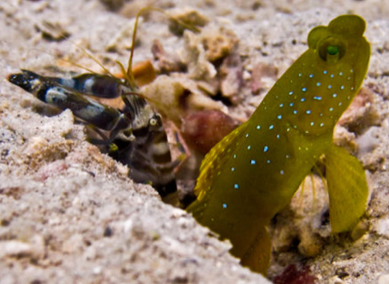
Figure 1. Goby fish/shrimp pair sit in alert poses.  source
Lucky for these shrimp, over 120 species in the family known as Gobiidae have formed mutualistic symbiotic relationships with these Alpheus shrimp. More specifically the studies explored in this review focus on the following genera of gobiidae: Amblyeleotris, Ctenogobiops, Vanderhorstia, Cryptocentrus, Mahidolia, Tomiamichthys, Stonogobiops, and Psilogobius (Preston 1978, Karplus 1981, and Thacker 2011). The two form an unusual pair where the shrimp builds a burrow, sheltering both species, and the goby protects the shrimp and burrow. Pictured left is an example of such a pairing. This symbiotic relationship between several species of gobiidae fish and alpheidae shrimp is a unique partnership which enhances each individual's survival and is feasible due to their unique communication.
            While the understanding of how the goby and shrimp pair up is limited, many studies have been conducted in the wild to evaluate trends between pairings. Most pairings are observed in locations relatively close to reefs. A statistical analysis conducted in the Red Sea examined 750 burrows inhabited by goby/shrimp pairs. The pairs were evaluated on a vertical and horizontal scale based on the location and composition of their burrows. This study discovered that the shallower the water and the closer the burrow was to the reef, the pairings had higher specifications for partner selection (Karplus 1981). Gobies chose shrimp based on type of sediment used (fine, coarse or intermediate) to form the burrows and the burrows’ proximity to the reef. Deeper water gobies and shrimp lacked the complexity based on burrow composition in selection, which was hypothesized due to the decrease is sediment variation (Karplus 1981). While this study did not entirely solve the mechanism behind the pairing as it excluded behavioral characteristics, it did further establish the complexity of the relationship. Other studies have mentioned gobies making selection of shrimp based on coloration or chemical discharges (Preston 1978). It can be safe to say that the selection of pairs is obviously dependent on many variables to properly combat the environment at which the pair is located. Once a pair is finally together the mutualist relationship can begin and the interspecies communication can be observed.
Figure 2. Goby and shrimp sitting at entrance of burrow.    Source. 
            Communication can be described as an exchange of information translated between a sender and a receiver. The goby and shrimp pair is one of the few examples of interspecies communication used for mutual survival (Preston 1987). It is understood that the blind shrimp uses the goby as a seeing-eye dog. While their communication to achieve this is complex, it does not start out as such. The two develop their communication as soon as the goby enters an available burrow. Once the pair begins their relationship, the goby stands at either the opening of the burrow or on top of the burrow carefully keeping alert for predators or rival gobies. The shrimp approaching the entrance of the burrow will use its longest antennae to reach for the goby’s caudal fin, where it will remain in contact while exiting the burrow. It is through this connection that the pair communicates (Preston 1987).  The goby communicates the perceived danger through dorsal fin extension, a variety of tail flicks, and sand nibbling. These actions are all interpreted by the shrimp through the antennae connection. If a signal for danger is sent, the shrimp will either “sit” or “flee”. “Sitting” in conjunction to the still goby can boost each other’s camouflage (Preston 1987). However, if the danger is too threatening, the shrimp will retreat into the burrow and the goby will follow. The goby always enters after the shrimp, never before. It is the goby who exits the burrow post-fleeing to determine if the danger is gone and will signal to the shrimp to commence excavation of their burrow. This communication is special for the pair, as gobies only alert for danger when a shrimp is present (Preston 1987). This tactile method allows the goby to focus on spotting incoming dangers. While the main form of communication between the two is tactile, there have also been suggested forms of chemical and visual communication (Preston 1987).

            The symbiotic relationship between these creatures is clearly beneficial as it remains within each other’s evolutionary lineages. There are roughly 120 species of gobies that illustrate an obligate mutualistic association with a burrow-dwelling shrimp (Thacker 2011). Through phylogenetic studies of the gobies and shrimp it has become clear that this mutualistic relationship has evolved twice. The occurrence of this association increases the fitness of both the goby and shrimp. This relationship though only occurs during the adult phase for both shrimp and goby. In studies without burrowing shrimp present gobies have higher rates of mortality without the hide. Similarly, shrimp without a goby have a noticeably slower rate of growth and excavating capabilities. However, when together the goby receives a protective burrow at night and the shrimp receives protection during the day, dually increases each other’s survivability (Thacker 2011). These boosts in protection allow both to thrive without having to expend energy on protection and redirect their energy to either excavating or guarding.

            This mutualistic symbiotic relationship can base its success due to the rare interspecies communication seen between the several species of gobies and Alpheus shrimp that live near reefs. It is obvious that both the goby and shrimp, once in its respective adult phase, have a higher survivability together as this association has occurred twice in their evolutionary lineages. Through this association individually they can spend their available energy in a way that boosts their collective productivity to ensure survival. It is for these reasons that the goby and shrimp are such a unique partnership.
                                                          

References

Karplus, I., R. Szlep, and T. M. 1981. Goby-shrimp partner specificity. I. Distribution in the northern Red Sea and partner specificity. Journal of Experimental Marine Biology and Ecology 51(1):1–19.
Preston, J. 1978. Communication systems and social interactions in a goby-shrimp symbiosis. Animal Behaviour 26:791–802.
Thacker, C. E., A. R. Thompson, and D. M. Roje. 2011. Phylogeny and evolution of Indo-Pacific shrimp-associated gobies (Gobiiformes: Gobiidae). Molecular Phylogenetics and Evolution 59(1):168-176.

Is the Pirate Perch Really a Ghost? A Look into the Mechanism of Chemical Camouflage, by Kevin Eliason


The pirate perch isn’t a pirate and it isn’t a perch, but it may be a ghost. The pirate perch (Aphredoderus sayanus) is a fish that lives throughout much of the southern United States and Mississippi drainage. The pirate perch is a monotypic family, sayanus being the only species. Page and Burr describe the species having: a short deep body often 3-4 in long, large head, large mouth, anus and urogenital opening between branchiostegal membranes(Page and Burr 2010)(fig 1). The pirate perch lives in backwaters and swampy areas, often around vegetation and over mud bottom. Pirate perch are prey for birds, fish, and water snakes. In order to avoid predation pirate perch often stay close to woody debris for protection and are nocturnal to help avoid site based predators. The pirate perch in turn feed on primarily small freshwater shrimp and insect larvae but are generalist feeders (McCallum 2012). Pirate perch also use a form of chemical camouflage/ chemical deception to potentially avoid predation and enhance predation on chemical sensitive prey (Resetarits and Binckley 2013).
You may be asking yourself, “What is this chemical camouflage?”  In the case of pirate perch, the mechanism of camouflage isn’t exactly known, however, it is believed that pirate perch have evolved it as a novel way of hiding from prey. Dr. Resetarits explored the capabilities of chemical camouflage in pirate perch using artificial ponds in which pirate perch were put in adjacent ponds with sunfish and ponds without fish as a control. Dr. Resetarits found that beetles and tree frogs both actively avoided ponds with sunfish, but no significant difference between pirate perch ponds and controls were observed (Binckley and Resetarits Jr. 2003; Resetarits and Pintar 2016). Resetarists proposed three possible mechanisms for this camouflage: Distorted or mixed signals, mimicry of a non-threatening organism, or simple cloaking and lack of signal. I will explore each of these methods, and together we will try and uncover the ghost of the fish.
Figure 1. Aphredoderus sayanaus Image Credit: Ellen Edmonson and Hugh Chrisp
First, distorted and mixed chemical signals; a mechanism would imply that the pirate perch still emits a chemical signal but it doesn’t register the same as other fish. This method is the most probable, in my opinion, based on Resetarists’s findings as the number of beetles and tree frogs were generally lower then controls, just not at a significant level. This apparent trend may imply that some sense of predation was still occurring at the ponds with pirate perch. This would lead us to believe that it is still emitting a chemical signal, but not easily detected.
Second, mimicry of a nonthreatening organism. This method is used often in nature as a defense against predators. Some familiar mimics may include coral snake/milk snakes and stick bugs. This mimicry is used as a defense against predators to either hide in plain site or imitate a dangerous organism. There are also aggressive forms of mimicry like freshwater mussels whom lure fish in with their mantles shaped like small fish and insects in order to inoculate them with young. Parasites are also well known to use mimicry to trick hosts into eating them. If pirate perch utilized this method it would be likely that they are mimicking something that is either not a fish or as a nonthreatening fish, like a sucker or non-insectivorous fish. I believe mimicry to be the least likely of the three proposed but also one of the hardest to prove. Some potential issues are if mimicry is the mechanism used, what are the pirate perch mimicking and how does that mimicry deceive different types of prey items.
The third and final mechanisms is cloaking of the chemical signal. This mechanism would insinuate that the pirate perch has evolved to not exhibit the chemical markers that other fish have. This method is also very probable as the true mechanism of pirate perch’s chemical camouflage. This is probable due to evolution being easier for pirate perch to lose their chemical signature or produce a chemical signature that that doesn’t bind or respond to the normal receptors. Also, being a monotypic species it is possible that lacking chemical signatures has been an ancestral trait that only survives in the pirate perch.
In conclusion, I believe that out of the three methods it is most likely that the pirate perch achieves chemical camouflage using distorted or mixed signals. I support this belief based on Resetarits’s findings with beetles and tree frogs. Also, It is unlikely that beetles and tree frogs receive signals in the exact same way, this makes me believe that a distorted signal is more likely then cloaking which may not be effective on all types of organisms. In addition, it is also possible that the mechanism used by pirate perch may not fit neatly into one of these three categories. Rather, the mechanism is a little bit of two or all three mechanisms. This could be achieved by distortion of the chemical signal that may be sensed more like some other organism. Alternatively, it also could be distortion to the point that the sense is overwhelmed and essentially cloaking has occurred. These questions cannot be answered with the current knowledge of the pirate perch. This mechanism, which potentially represents a new evolution in the predator-prey arms race. The pirate perch will no doubt be a subject of returning research as the ichthyology community begins to unravel the mysteries of the pirate perch and its chemical camouflage.
References
Binckley, Christopher A., and William J. Resetarits Jr. 2003. “Functional Equivalence of Non-Lethal Effects: Generalized Fish Avoidance Determines Distribution of Gray Treefrog, Hyla Chrysoscelis, Larvae.” Oikos 102(3): 623–29.
McCallum, Malcolm L. 2012. “Notes on the Diet and Egg Clutches of the Pirate Perch (Aphredoderus Sayanus) from Central Arkansas.” Southeastern Naturalist 11(3): 543–45.
Page, Lawrence M., and Brooks M. Burr. 2010. A Field Guide to Freshwater Fishes: North America, North of Mexico. Second. Boston; New York: Houghton Mifflin.Print.
Resetarits, William J., and Christopher A. Binckley. 2013. “Is the Pirate Really a Ghost? Evidence for Generalized Chemical Camouflage in an Aquatic Predator, Pirate Perch Aphredoderus Sayanus.” The American Naturalist 181(5): 690–99.
Resetarits, William J., and Matthew R. Pintar. 2016. “Functional Diversity of Non-Lethal Effects, Chemical Camouflage, and Variation in Fish Avoidance in Colonizing Beetles.” Ecology 97(12): 3517–29.

Evolutionary Significance of the Breathing and Movement of Bichirs, by Haley Jenkins


Forrest Gump asks, “What’s normal anyways?” While he may not be talking about fish, his question rings through all our minds when we think of them. There is truly no such thing as a “normal” fish, especially when it comes to the beautiful Bichirs (family Polypteridae, with two genera of Bichirs underneath that category). Bichirs, however, are an especially interesting type of fish because they show many mechanisms of vertebrate evolution, including walking on land and breathing air. This paper is going to give some background on Bichirs, explain the evolution and physiology of their breathing and mechanisms of movement, and give insight to their ties to tetrapods.

Saddled Bachir (Polyuterus endlicher) Source 
            Bichirs are ray-finned fish in class Actinopterygii, subclass Cladista, family Polypteridae. There are 2 genera and 12 species of Bichirs within this family (Hastings 2014). Bichirs are believed to be a sister group to all other fishes that are in Actinopterygii due to the fact that they share many of the same characteristics (Hastings 2014). While they do have many similarities with the rest of their class, they also have many characteristics that are strange. They possess lungs, a spiracle valve in their intestine, two gular plates, and they have a skeleton that is mostly made of cartilage (Hastings 2014). There has been consideration to put Bichirs in their own separate group among teleosts, but this has not yet occurred (Zaccone et al. 2009). Bichirs are carnivores—their main prey of choice are fish, mollusks, and crustaceans (Hastings 2014).

            Of all of the strange characteristics that Bichirs have, there are two that particularly stand out—one of these are the lungs. Lungs were present in the majority of the late Paleozoic fishes, so lung-breathing has not been as uncommon of a method of respiration as most would think (Zaccone et al. 2009). Today, there are some teleost fishes that depend on modified lungs for oxygen uptake when the oxygen conditions in their aquatic environment are poor. The reliance that these fishes have on their air-breathing modifications depends heavily on their adaptive radiation and on the evolutionary capacity the populations have to produce gas bladders (Zaccone et al. 2009). Bichirs are among these fishes. They are referred to as “dual breathers”, so gills and lungs are the two mechanisms they use to take in oxygen (Zaccone et al. 2009). When the oxygen levels in the water are too low, Bichirs resort to taking oxygen in from the air because gills cannot function well in low-oxygen environments (Zaccone et al. 2007).
Internal organs of the Bichir, Photo by Maija Karala. Source 


            A study was done to look at how the evolution of lungs in Bichirs is related to the evolution of lungs in tetrapods. In history, there are many similarities in the development of lungs between Bichirs and tetrapods (Tatsumi 2016). There are three genes that are very important in the early stages of lung development that were found in both Bichirs and tetrapods (Tatsumi 2016). This study also produced results that suggest that one of the genes (the lung enhancer Tbx4) was most likely already existent in the common ancestor of fishes in the classes Actinopterygii and Sarcpterygii (Tatsumi 2016). These findings further provide evidence of the evolutionary connections between tetrapods and Bichirs.

            Another strange adaptation of Bichirs is their ability to walk on land. Baker conducted an experiment to see how Bichirs raised on land for eight months would walk in comparison to those who were raised in a usual aquatic environment. He found that the Bichirs that walked on land were more successful at doing so than the ones that had grown up in the water (Hutchinson 2014). They walked much faster and their fins moved much easier across the land than the water-reared group of fish (Hutchinson 2014). Baker also looked at how the skeletal structures in the two groups differed and found that the neck and shoulder bones developed differently so that they could move much more easily on land (Hutchinson 2014). There was surprisingly no difference in the way the two groups swam, which showed that there was no trade-off of traits (Hutchinson 2014). These outcomes suggest the modifications that allowed fins to become limbs 400 million years ago when some fish switched from water to land (Baker 2014). According to Baker (2014), the evolution of Bichirs’ ability to walk on land is thought to give rise to tetrapods, which range anywhere from amphibians to mammals. This experiment was done in order to look at how evolution affected those tetrapods so long ago (Baker 2014).

            While Bichirs are a quite strange group of fishes, they have significantly helped to explain two very important evolutionary patterns in tetrapods. The comparison of the development of lungs between Bichirs and tetrapods, as well as how Bichirs helped to give rise to tetrapods by their ability to walk on land, has given scientists more insight on the mechanisms that tetrapods possess and how they acquired them. The studies by Baker and Tatsumi help to provide the most evidence of how these amazing fishes have helped to explain the puzzling methods of how tetrapods became.

References 


Baker, N. 2014. How Fish Can Learn to Walk. Nature.
Hastings, P. A., Walker Jr., H.J., Galland, G. R., editors. 2014. Fishes: A Guide to Their            Diversity. University of California Press, Oakland, California.
Hutchinson, John. 2014. Evolutionary developmental biology: dynasty of the plastic fish. Nature       513: 37-38.
Tatsumi et al. 2016. Molecular developmental mechanism in polypterid fish provides insight into        the origin of vertebrate lungs. Scientific Reports.
Zaccone, et al. 2007. Innervation and Neurotransmitter Localization in the Lung of the Nile   bichir Polypterus bichir bichir. The Anatomical Record 290: 1166-1177.
Zaccone et al. 2009. Innervation of lung and heart in the ray-finned fish, bichirs. Acta   Histochemica 111, 3: 217-229.