Posts
Posts


Oprah Winfrey said the “Year’s end is neither an end nor a beginning but a going on, with all the wisdom that experience can instill in us. Cheers to a new year and another chance for us to get it right.” At this year's end I chronicle the many transitions, accomplishments, and beginnings in the Fluvial Fishes Laboratory at Virginia Tech. This past summer, technicians Skylar Wolf and Hae Kim, graduated and began graduate programs at Oklahoma State University and West Virginia University, respectively. In March, Jason Emmel accepted a position as Fisheries Biologist with Solitude Lake Management, LLC.
 |
| Farewell for Jason Emmel (top, left) with (from left to right) Zach Martin, Joe Schmitt, Hae Kim, Skylar Wolf, Corbin Hilling Katie McBain, Jess Jones, and Don Orth. |
Joe Schmitt is now a USGS pathways intern in addition to Virginia Sea Grant Fellow; he passed his preliminary exams this summer, scheduled a spring defense, and assists with field research on Lake Erie. Corbin Hilling won the Department award for outstanding GTA, and Hae Kim won the Skinner Award from the American Fisheries Society. I continue to expect and see great work from the many students and associates that work in the lab. Other awards received are indicated in photos below.
 |
| Annual College Awards Banquet. Skylar Wolf, Corbin Hilling (Outstanding GTA), Joel Snodgrass (Dept. Head), and Hae Kim. |
 |
| Eric Hallerman presents check for Robert Ross Graduate Scholarship to Jason Emmel. |
 |
| Eric Hallerman presents Robert E. Jenkins Undergraduate Scholarship to Skylar Wolf. |
 |
| Eric Hallerman presents check for Robert Ross Graduate Scholarship to Corbin Hilling. |
 |
| Skinner Memorial Travel Award Winners in Tampa, Florida. Hae Kim and former Hokies Dan Weaver and Michael Moore. |
The lab members made numerous presentations for the Virginia Chapter of the American Fisheries Society, Northeast Association of Fish and Wildlife Agencies, New River Symposium, World Recreational Fishing Conference, Annual Meeting of the American Fisheries Society, Southeastern Association of Fish and Wildlife Agencies, and the Invasive Catfish Symposium. Many other talks were given wherever and whenever someone asked about fishes, such as the Master Naturalists and James River Rats.
In July, I attended the World Recreational Fishing Conference. Click here or tweets about the conference See photo of poster at this link.
 |
| World Recreational Fishing Conference poster session. Background. |
 |
| Joe Schmitt, Jason Emmel, and Zach Moran with 40 kg Blue Catfish. |
Carey,
C., D. Orth and V. Emrick. 2017. Biological surveys for the Fries
Hydroelectric Dam Project in the upper New River, Virginia.
Final Report to TRC Solutions, Reston, Virginia.
Conservation Management Institute, Department of Fish and Wildlife
Conservation, College of Natural Resources and Environment, Virginia
Polytechnic Institute and State University, Blacksburg. VTCMI-Technical
Report-03-2017.
Dickinson, B.D.,
S.L. McMullin, D.J. Orth, and J.R. Copeland.
In press. Trotline catch rates vary by hook and bait type in the New River, Virginia. Journal
of the Southeastern Association of Fish and Wildlife Agencies.
Hatcher, H.R., M.J. Moore, and D.J. Orth. 2017. Spawning observations of Clinch Dace in a
mountain stream. The American Midland
Naturalist 177:318-326.
Hilling, C.D.,
S.L.Wolfe, J.R. Copeland, D.J. Orth, E. M. Hallerman. In press. Occurrence of two non-indigenous catostomid fishes in the New River, Virginia. Northeastern Naturalist
Hilling, C.D.,
A.J. Bunch, R.S. Greenlee, D.J. Orth and Y. Jiao. In press. Natural mortality and size structure of introduced Blue Catfish in Virginia tidal rivers. Journal
of the Southeastern Association of Fish and Wildlife Agencies.
Martin, Z.P., S. Ciparis, P.L. Angermeier, and D.J. Orth. 2017. Impact of mining effluent on fish populations. Virginia Center for Coal and Energy Research, Blacksburg, Virginia. 87 pp.
Moore, M.J., E.M. Hallerman, and D.J. Orth. 2017. Densities and population sizes of Clinch Dace Chrosomus sp. cf. saylori in the upper Clinch River Basin in Virginia. Copeia 105(1):92-99. doi: http://dx.doi.org/10.1643/CI-16-506.
Martin, Z.P., S. Ciparis, P.L. Angermeier, and D.J. Orth. 2017. Impact of mining effluent on fish populations. Virginia Center for Coal and Energy Research, Blacksburg, Virginia. 87 pp.
Moore, M.J., E.M. Hallerman, and D.J. Orth. 2017. Densities and population sizes of Clinch Dace Chrosomus sp. cf. saylori in the upper Clinch River Basin in Virginia. Copeia 105(1):92-99. doi: http://dx.doi.org/10.1643/CI-16-506.
Moore, M.J., D.J. Orth, and E.A. Frimpong.
2017. Occupancy and detection of Clinch Dace using two gear types. Journal of Fish and Wildlife Management 8(2):530-543. https://doi.org/10.3996/022017-JFWM-01 Link to press release
Orth, D. J.
in press. Social media may empower fisheries students via learning networks. Fisheries 42:
Orth, D.J., Y.
Jiao, J.D. Schmitt, C.D. Hilling, J.A. Emmel, and M.C. Fabrizio. 2017. Dynamics and role of non-native Blue Catfish Ictalurus furcatus in Virginia's tidal rivers. Final Report, Virginia
Department of Game and Inland Fisheries, Henrico, Virginia. 129 pp.
Orth, D.J. 2017. How I got where I am. American Currents 40(4):21-24. To subscribe.
Orth, D.J. 2017. Beautifully Grotesque Fish of the American West. Book Review Pacific
Northwest Quarterly 108:36-37
Schmitt, J.D., E.M. Hallerman, A. Bunch, Z. Moran, J.A.
Emmel, and D.J. Orth. 2017. Predation and prey selectivity by non native catfish in an Atlantic slope estuary. Marine and Coastal Fisheries: Dynamics,
Management, and Ecosystem Science 9(1):108-125. Doi:
10.1080/19425120.2016.1271844
 |
| Caitlin Carey, Research Associate, with Muskellunge captured on the New River. |
New video media were created for a variety of purposes.
- Learn Your Fishes Well -- to the tune of Teach Your Children Well
- DNA barcoding -- an introduction to DNA barcoding and confirmation of the new Moxostoma introduced in the New River
- Know all the fish -- parody to the tune, King of the Road, by Roger Miller
- Say Croppie -- parody to the tune of Let it Be, by Paul McCartney and John Lennon
- Accidental Gar -- parody to the tune of The Long and Winding Road, by Paul McCartney and John Lennon
- My dog ate my lab notebook -- Michael Moore describes the stories contained in his lab notebook after his dog chewed on it.
- My awesome science -- Created for Patrick Goff, Middle School Teacher, summer project on Why My Science is Awesome.
 |
| Undergraduate students Hunter Hatcher, left, and Allison Mosley, second from right, help Michael Moore, second from left, and Donald Orth count and identify fish collected from a southwest Virginia stream before safely returning them to the stream. Photo by Valerie F. Orth. see press release. |
 |
| Rebecca Bourquin, MS student, studies the population genetic differentiation of the Clinch Dace in relation to barriers. |
 |
| Chanz Hopkins with a recent darter capture. |
E.M. Hallerman, M.H. Schwarz, and D.J. Orth. Commercial production of selected native freshwater ornamental species. Award from NIFA, Southern Regional Aquaculture Center. Project will develop captive production protocols for Rainbow Darter Etheostoma caeruleum and Mountain Redbelly Dace Chrosomus oreas. Sara Sweeten and Caitlin Carey will lead this effort.
Integrative Science and Solutions for Freshwater Systems: Concept Paper - A plan to build a signature-strength in Freshwater Systems. Virginia Tech Global Systems Science Destination Area. This is a multi-investigator effort to enhance an interdisciplinary program whereby a holistic perspective of freshwater systems can permeate into VT-shaped students and bridge the gaps among water-relevant biophysical, social sciences, and the arts.
P. Bugas, M. Pinder, V. Kells, D. Wheaton, C. Hilling, and D. Orth. A Field Guide to the Freshwater Fishes of Virginia. Johns Hopkins University Press. Field guide will fulfill a longstanding need in nature education. Central and Southern Appalachians are unrivaled in the U.S. for aquatic species diversity, which makes this regional field guide extremely important. The book will teach the beginner how to identify the families and reliably identify the most common species with field characteristics.
 |
| Post-doctoral research associate, Sara Sweeten, displays a Jefferson salamander she raised in captivity. |
In addition to student essays (example), we frequently post fish-related articles on Chesapeake Catfish, Virginia Tech Ichthyology, and elsewhere.
Catfish Now!
- The importance of taking kids fishing. by Joe Schmitt
 |
| Lab challenge: Guess who is older! the catfish or the boy? |
ChesapeakeCatfish.com
- How big can North American Catfish get? by Joseph Schmitt
- Defining an invasive species - not as straightforward as you would think. by Joseph Schmitt
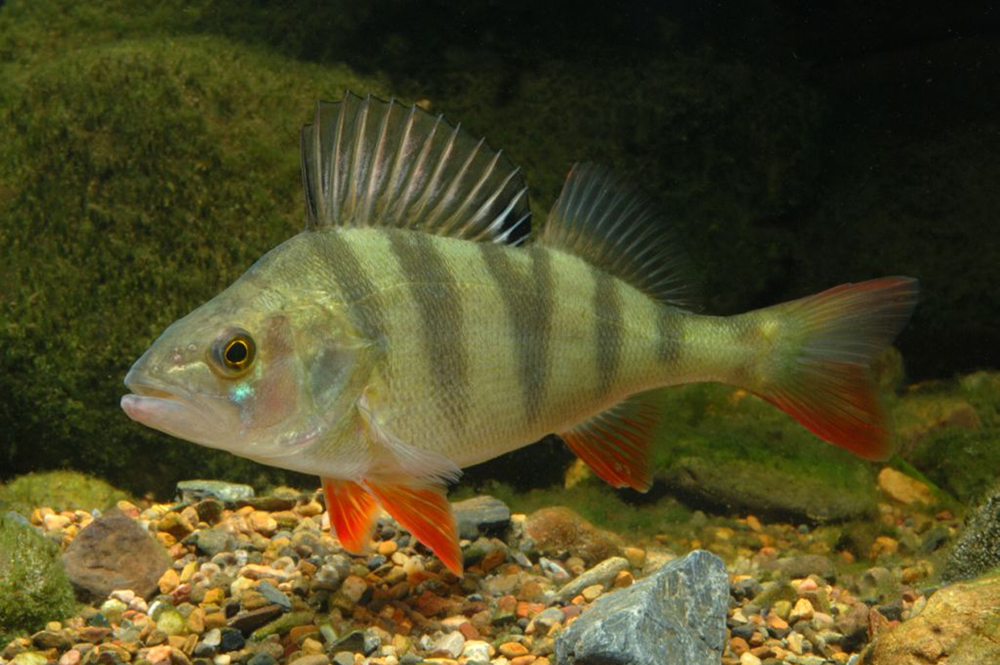
- Yellow Perch and European Perch. Dec 8
- Trends in Dam Removal: Reversing Irreversible Decisions. Nov 17
- Can weed relieve stress in fish? Nov 10
- Social Media is About the Social. Sept 22.
- Hackelbacks and Old Spade Face. Aug 16.
- Climate Change and the Fishes. July 13.
- Lessons from Lionfish. June 7.
- Playlist for Fish Nerds. June 6.
- Bowfishing for “Rough”Fish. June 1.
- Congratulations Graduates! May 19
- A Rare Peek at Clinch Dace Spawning. April 18.
- Mad About Madtoms April 12.
- Painful Stings of the Notorious Noturus April 7.
- Learning Lessons about Lampreys. April 2.
- Pike Killifish: A Small, Specialized Ambush Piscivore. Feb 9
- Puzzling Over Large Aggregations of Sharks. Jan 31.
- Shades of Gray Snapper. Jan 26.
- Sea Lamprey and Unexpected Costs of Shipping. Jan 20.
 |
| I don't always think it was a good year. But 2017 was awesome. Cheers to the new year. |