Tuesday, June 14, 2016

LIft the Ban on Harvest of Atlantic Goliath Grouper? by Cantley Krafft

Atlantic Goliath Grouper (Epinephelus itajara) are, as the name implies, giant groupers that can be found in shallow waters along tropical coasts from Florida to Brazil. Due to their outstanding size and schooling behavior, these grouper were once vulnerable and highly sought after by commercial fishermen and divers. In 1990 the population was estimated to be approximately 5% of the original abundance (Shideler 2014). This devastation in the population was a result of poor water management practices and overfishing. Thus, in 1990, the Atlantic Goliath Grouper was listed as a critically endangered species by the IUCN, and a harvest ban was initiated (Koenig 2014). However, Goliath grouper populations have since seen a significant recovery, and now fisheries managers are facing pressure by anglers, divers, and other members of the Floridian community to lift the harvest ban in the United States (Shideler 2014). After studying the current ecological and human factors that influence the grouper populations, lifting the harvest ban on Goliath grouper would most likely threaten the population significantly and should not be done.
Goliath Grouper. Photo by W. Stearns is licensed under Ocean Research and Conservation Association
            Fisheries managers have studied the ecological influences on Goliath grouper for a long time now, and have found that these grouper have a large dependence on mangroves. Goliath grouper depend on mangroves largely for spawning and nursery grounds, as well as recruitment areas for adulthood. Mangroves provide a habitat for the juvenile groupers to obtain nutrients and protection before they reach adulthood and head out to coral reefs or sunken ships nearby (Frias-Torres 2006; Koenig et al. 2007). Koenig (2014) states “in the 1900s, before the harvest ban, poor water management in South Florida initiated the [population] decline by reducing the quality and coverage of mangrove habitat.” Without stable sanctuary for the juveniles, they were not likely to survive and grow. On top of that, immense amount of fishing pressure on the grouper enhanced the steady population decline before the harvest ban. Now with the lack of heavy fishing pressure, the species has recovered significantly (Koenig 2014) by finding safeguard in the few quality areas of mangrove habitat such as the Ten Thousand Islands and the Everglades off of the Florida coast. However, much of the mangrove that is available is largely threatened or declining due to industrial and agricultural development and pollutions. Therefore, if the mangrove habitat is not effectively managed and conserved, lifting the harvest ban will likely have negative repercussions and promote a decline in Goliath grouper population.

            It’s critical to recognize that the current abundance and stability of mangroves could result in a large decline of Goliath grouper if the harvest ban is lifted. The low abundance of mangroves is a direct result of the channelization to redirect freshwater flow from the Everglades to industrial areas, mosquito control in the tropical regions, and of course the industrial, agricultural, and residential developments (FSUCML 2014). According to the Florida Department of Environmental Protection (FDEP), a large loss of mangrove acreage is attributed to human activities; Tampa Bay has lost over 44 percent of its coastal wetlands acreage (which includes both mangroves and salt marshes), Charlotte Harbor has lost 59 percent of its original mangrove habitat, Lake Worth has lost 87 percent of its mangrove acreage, and lastly 76 percent of the existing mangrove acreage in St. Lucie Inlet is not productive to the fishery due to mosquito impoundments (FDEP 2015). With the great dependence that Goliath grouper have on mangroves, fisheries managers and the FDEP must take mangrove habitat conservation into account before considering the potential lift on the harvest ban. Without the appropriate abundance of quality mangrove environments, lifting the ban could severely harm the Goliath grouper populations.

            Many anglers, divers, and other members of the Floridian community claim the Goliath grouper are dominating the area and that the harvest ban should be lifted. Divers have established this belief due to the large amount of recorded encounters with large abundances of these fish while diving, which is likely a result of the schooling behavior in the grouper. Moreover, fishermen have witnessed Goliath grouper stalk and ambush a fishermen’s catch right off their fishing line. This has resulted in the common belief that Goliath groupers are “eating all the fish” because occasionally a Goliath grouper will come and devour a vulnerable fish that’s struggling on the end of a fishing line. Rather, goliath groupers are simply opportunity seekers, and will seize an opportunity at an easy meal if one presents itself, such as a struggling fishing on the end of a fishing line. It’s actually rare for these fish to consume prey other than crabs and crustaceans (FFWCC 2016). While Goliath grouper populations have increased significantly since the harvest ban, lifting the ban now could result in an over-exploitation of the fish and lead to a large decline in the population. 
Juvenile Goliath Grouper  Source
With or without the harvest ban, Goliath groupers are one of the largest big game fish on the planet, and are sought after by anglers around the world. Before the ban, the populations were heavily pressured and over-exploited by fishermen, and as a result, the population dropped significantly. They were extremely vulnerable to overfishing due to their lack of fear for humans, their large size, and schooling behavior (Riggs 2009). With the harvest ban in place, fishermen are still able to pursue these goliaths as long as they are “returned to the water free, alive, and unharmed” (FFWCC 2016) after being caught. With these circumstances in place, the Goliath grouper population has seen significant growth and recovery; the harvest ban has assisted the recovery of Goliath grouper significantly. If the harvest ban is lifted, it is likely that people will harvest the growing population right back down due to the value of Goliath grouper as a superior big game fish.

            In conclusion, there are many environmental and human factors to consider when considering a potential lift on the harvest ban of Goliath groupers in the United States. Given the instability and threats to the species’ habitat and lifestyle, the harvest ban should not be lifted. If the harvest ban is lifted under the current circumstances, this could produce a double negative that could drive the Goliath grouper abundance down significantly. Until there is a substantial increase in the abundance and quality of mangrove for the Goliath grouper to thrive throughout, and other influential factors can be deemed stable, the harvest ban should remain closed.
 
References
FDEP (Florida Department of Environmental Protection). “Mangroves ‘Walking Trees.’” Florida Department of Environmental Protection http://www.dep.state.fl.us/coastal/habitats/mangroves.htm (accessed April 14, 2016).
FFWCC (Florida Fish and Wildlife Conservation Commission). “Goliath Grouper: Epinephalus itajara.” Florida Fish and Wildlife Conservation Commission http://myfwc.com/fishing/saltwater/recreational/goliath-grouper/ (accessed April 15, 2016).
Frias-Torres, Sarah. 2006. Habitat use of juvenile goliath grouper Epinephelus itajara in the Florida Keys, USA. Endangered Species Research 2:1-6
FSUCML (Florida State University Coastal and Marine Laboratory). “Global Threats to Goliath Grouper.” FSU Coastal and Marine Laboratory https://www.marinelab.fsu.edu/labs/ck/grouper-ecology/goliath/threats (accessed March 17, 2016).          
Koenig, Christopher. “Back from the brink: Atlantic Goliath Grouper recovery in the southeastern United States.” FSU Coastal and Marine Laboratory https://www.marinelab.fsu.edu/labs/ck/grouper-ecology/goliath/ (accessed April 12, 2016)
Koenig, C. C., F. C. Coleman, A.-M. Eklund, J. Schull, and J. Ueland. 2007. Mangroves as Essential Nursery Habitat for Goliath Grouper (Epinephelus itajara). Bulletin of Marine Science 80(3):567-585.
Riggs, M. 2009. Scaling of Feeding Behavior and Performance in the Goliath Grouper, Epinephelusitajara.  Honors College Thesis project, Western Kentucky University,  Bowling Green, Kentucky.
Shideler, G.S. 2014. Lifting the Goliath Grouper harvest ban: Angler perspectives and willingness to pay. Fisheries Research 161:156-165


Sustainable Barramundi Fish Farming, by Clay Ferguson

It took thousands of years for the world human population to reach 1 billion people, and in the past 200 years it grew sevenfold (UNFPA 2016). In an inevitable reaction to this growing revolution, man has revolutionized simple fishing and netting techniques into complex controlled systems of domestication, called aquaculture. Aquaculture quickly became popular throughout the world with many species for the main reason that there was no laborious and time consuming ‘fishing’ involved. However, in today’s society, aquaculture has taken on a different role in which its main purpose is to help sustain and subsidize for the huge biomass we exploit every day. Although aquaculture practices have changed dramatically through their existence, the species domesticated have not varied much. Since the common carp’s first application to aquaculture, species including mussels, shrimp, catfish, tilapia, salmon, trout, bass, and other fin fishes have made their names in the list of cultivable species (Rabanal 1988). All species have a relative aquaculture weaknesses be it temperature or pH tolerance, feed to growth ratio, or even stress. Tilapia have been a top species choice for many aquaculturalists due to their hardiness, growth rate, and stress tolerance, but the Barramundi (Lates calcarifer) has begun to shine where even the tilapia has not.  Barramundi seem to have a positive reaction in every checklist aquaculturalists have for potential species. They are hardy like the tilapia, taste like a cross between a snapper/grouper and halibut, contain optimum omega-3 levels with minimal negative omeg-6 levels, are omnivorous, can be raised without hormones, and most of all has one of the quickest food to growth ratios of any domestic species (Briter 2014). The barramundi has taken off across the world as a premier species suited for aquaculture because of these reasons and as scientists and farmers look to enhance the successful applications of this fish, developmental questions arise as to what farming strategies or even what environmental conditions when applied to barramundi culture will produce the best quality sustainable fish.
           
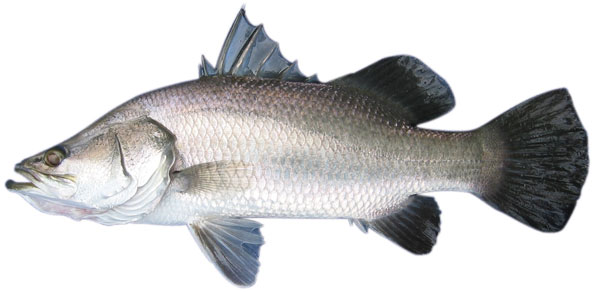
Barramundi (Lates calcarifer)  Source: Queensland Government
            Barramundi can be found in Southeast Asia down to Australia. They are oviparous fish that will lay millions of small pink eggs, which hatch within 15 to 20 hours (Thorne 2011). All barramundi start their lives male and in fresh water river systems, living there for a few breeding seasons before venturing to brackish or saltwater. Females do not appear until around the age of 3 or 4 creating a rather unique social and reproductive system. They grow rapidly averaging around the 1.5:1 kilogram of food to kilogram of weight growth in captivity (Thorne 2011). Captive barramundi have been found to have higher omega-3 and better omega 3-6 ratios than their wild counter part (Nichols et al 2014). These two attributes both create high demand from consumers choosing the healthy fish and benefit farmers because they see faster money return compared to other species. Barramundi demand a high protein diet for optimum growth, although scientists are attempting to reduce the reliance on wild caught fish as food. Achieving a truly sustainable farm requires research that can maintain high growth rates and taste, but not exacerbate already diminished primary consumers of our oceans.
           
Barramundi in grow-out tank.  Source:  Australis
            Industrial farming of the barramundi originated in Australia and South Asia in the mid to late 1900’s. For centuries they have been considered a prized sport fish exceeding 90 pounds and offering an intense battle when hooked (International Game Fish Association 2016). They have also been fished commercially, but are now governed by seasonal closures along with tackle and gear restrictions. Unlike many species, barramundi were not hatched and grown in captivity for population replenishment plans, but rather as a direct food source without the trivial and tidal patterns fishing can impose. Australians recognized their premium eating qualities and have industrialized into over 100 licensed farms throughout the country (ABFA 2008). These farms range from fresh to salt water ponds and cages to indoor recirculation systems. Outdoor grow out facilities, however, are strongly subjected to the environment they are established in, limiting feasible aquaculture locations and growth enhancing techniques. In order to command a better control on the entire life process and yield of the barramundi, Recirculating Aquaculture Systems (RAS) are the desired system across the world.

One major company in America growing barramundi in a commercial RAS system is Australis, Turners Falls, MA. Picking the barramundi was easy for Australis because, “The Sustainable Seabass has the same sweet, flavor and meaty texture as other Seabass, yet its unique eco-friendly profile makes it unlike any other fish available (Guerriero 2011).” Yet to run a successful barramundi operation, a RAS systems was absolutely necessary to maintain the optimum 25 degrees Centigrade for the species. Benefits in a RAS system can seemingly venture as far as technology can be advanced. Australis among many commercial aquaculture businesses utilize computerized sampling systems like Argus Control Systems or OSMOBOT to constantly regulate and record water variables such as: pH, dissolved oxygen, temperature, ammonia, nitrates, and many other important minerals (Stein and Holowko 2016). Any dramatic fluctuations in these variables can induce stress in the fish and increase chances of disease or death; therefore automated systems are crucial to maintaining optimum environmental conditions for the barramundi. Furthermore, automated systems can greatly reduce the workforce both in labor and time allowing for more focus on marketability and other business interests. Australis has eliminated many negatives impeding the growth of aquaculture systems by ensuring a closed loop system. This means they can ensure the barramundi, a non-native species does not happen to escape into our native waters and pose invasive issues. Also by using a circulatory system, Australis is not continually taking in, contaminating, and depositing water back into our streams. RAS systems are designed to use the same water for an extended period of time by way of filtration stages both physical and microbial/biological. Australis’ tank design has setup a continual hierarchy of similar sized fish giving them “more space to swim as they grow” and enabling each fish the equal opportunity to feed and become marketable (Guerriero 2011). Australis has developed a thriving international business through technological advancements but no factor is any more important than the principles of the barramundi’s ecology and lifecycle.
Barramundi is Australia's favorite fish, also known as as Asian Sea Bass and The Sustainable Seabass™ Source
There are many aspects that have yet to be analyzed to increase the sustainable level of farming this fish. Experiments are continuing to be funded for barramundi aquaculture research regarding challenges of manufacturing the best feed or even what water salinity yields the best tasting, growing, and healthiest fish. Australian Farmer Kel Gordon has designed an aquaculture system that grows quality barramundi but also rids of time and money a farmer has to invest in his system. His Pod system needs no pumps, is vertically integrated, overcomes cannibalism, limits stress to a minimum, and has been proven to return 37% profit within second year (Gordon 1999). Engineering ingenuity that saves farmers money while at the same time builds off of the ecological strengths of the barramundi is rapidly labeling fish farming as an efficient and sustainable practice. This is crucial since farming fish relies completely on what consumers think of every aspect of the system.  Looking beyond aquaculture RAS techniques, barramundi are now being trialed with past successful aquaponic plant species in fresh water systems. This conflicts with farmers who prefer salt water to produce best barramundi flavors, since they will not have the option of the highly desired freshwater plant species like tomatoes, lettuce, and strawberries (Diver 2006). This has opened a window for marine vegetation such as kelp and seaweed that has recently grown into a high demand international market. Establishing an aquaponics system can be expensive therefore setting up an aquaponics system that utilizes barramundi waste to produce additional profit is wise. Government subsidies are often provided if certain standards are met and if alternative energy like solar or geothermal are used in the RAS (Barclay 2015). In order to keep up with the increasing human population, it is of utmost importance that farming becomes sustainable, utilizing every phase of the system while reducing the amount of land needed. Although there is much research and technological advancements to come, the barramundi seems to be the future of sustainable aquaponic farming.


References

Barramundi Farmers Association (ABFA). 2008. Farmers Association Australia. Available: http://www.abfa.org.au/index.html/. (accessed April 2016)
Barclay, E. 2015. Investment Fund Pours Cash Into Cleaner, Greener Fish Farming. WVTF Public Radio NPR, the salt. Available: http://www.npr.org/sections/thesalt/2015/01/22/379090302/investment-fund-pours-cash-into-cleaner-greener-fish-farming/. (accessed April 2016)
Briter, P. 2014. Mariculture in the Northern Territory Barramundi. Sustainable Seas and Sustainable Aquaculture. MESA. Available: http://www.mesa.edu.au/aquaculture/aquaculture08.asp/. (accessed April 2016)
Diver, S. 2006. Aquaponics- Integration of hydroponics with Aquaculture. ATTRA- National Sustainable Agriculture Information Service. Available: http://cichlidfish.net/Ebooks/aquaponic.pdf/. (accessed April 2016)
Gordon, K. 1999. The Pod Recirculating Aquaculture System. Aquafarmer Australia Pty Ltd. Available: http://www.aquafarmer.com.au/Fish%20Farming.html/. (accessed April 2016)
Guerriero, K. 2011. Barramundi the Sustainable Sea Bass. Australis The Better Fish Aquaculture LLC. One Australia Way, Turners Falls, MA. Available: http://www.thebetterfish.com/the-healthy-fish/. (accessed April 2016)
International Game Fish Association. 2016. Barramundi Record. 300 Gulf Stream Way, Dania Beach, FL 33004. Available: https://www.igfa.org/species/80-barramundi.aspx?CommonName=80-barramundi.aspx/. (accessed April 2016)
Nichols, P.D., Glencross, B., Petrie, J.R., Singh, S.P. 2014. Readily Available Sources of Long-Chain Omega-3 Oils: Is Farmed Australian Seafood a Better Source of the Good Oil than Wild-Caught Seafood? NCBI. (accessed April 2016)
Rabanal, H. R. 1988. History of Aquaculture. Fisheries and Aquaculture Department, Organization of the United Nations. Tigbauan, Iloilo, Philippines. Available: http://www.fao.org/docrep/field/009/ag158e/AG158E01.htm/. (accessed April 2016)
Stein, Z. P. Holowko. 2016. Osmo Systems. OsmoBot Hydro Systems. Available: http://www.osmobot.com/models.html/. (accessed April 2016)
Thorne, N. 2011. Barramundi. Native Fish Australia (NFA). Victoria, Australia. Available: http://www.nativefish.asn.au/barramundi.html/. (accessed April 2016)
United Nations Public Fund. 2015. World population trends. UNFPA. Available: http://www.unfpa.org/world-population-trends/. (accessed April 2016)


Specialized Hearing in the Pacific Herring, by Jeff Abersold

Drop a stone into the water and it makes an audible “kerplop”.  Below the surface however, the same sound is much different.  Sounds travel faster underwater and must deal with dissolved particulates that reflect and scatter the wave causing pressure differences and vibrations.  Tap on the glass of an aquarium and the fish will scatter as if they were startled.  That is because they were startled!  The sound traveled through the water, was received by special organs inside the fish, and the fish responded.  This is done with a unique lateral-line and inner ear system composed of neuromast hair cells and the otolith, or ear bone, and the swim bladder (Higgs and Radford 2013).  This information is then used by the fish in order to determine the appropriate reaction to the sound.  Now you know why most aquariums have that little “Please do not tap on the glass” signs.
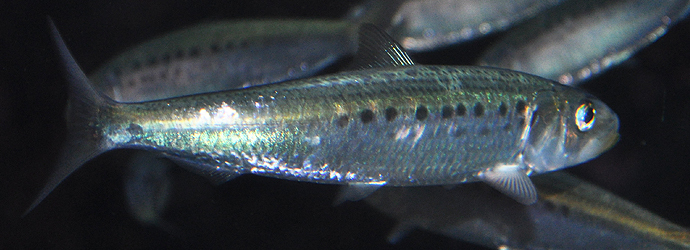
Pacific Herring Clupea pullasi  source
            Some species of fish, including the Pacific herring, have developed an even more advanced method of hearing.  Herring have three pairs of organs called Weberian ossicles which directly connect the swim bladder to the inner ear.  This structure forms two vesicles close to the otolith with one vesicle sending sensations directly into the utricle, which acts as a functional ear.  These sensations are then converted into vibrations which are interpreted by the fish (Enger 1967).  This advanced system allows herring to hear very well and increases survivability.  So, how would having excellent hearing directly benefit Pacific herring?

What a fish hears directly affects how a fish responds.  Herring, which are a schooling fish, use their increased sound reception to precisely locate a sound and then decide whether to adjust its movement speed, seek out other individuals to increase school size, or change direction.  Since sound travels much faster underwater and comes from all directions the fish must be able to detect exactly where a sound originates.  Pacific herring use their excellent hearing to precisely determine a sound’s source allowing them to determine if there is danger.  Since fish are almost constantly picking up various sounds they must have a way to filter out the important sounds.  Sounds must increase generally by 20-30 dB before any response is seen, in effect cancelling out surrounding “white” noise (Schwarz and Greer, 1984).  This ability to determine sound volume allows them to adjust to constant sounds even at higher decibels.  Once the initial startle response has occurred if the herring sense no danger, but the sound persists, they will continue to ignore it.   
Audiograms depict faintest sounds of differing frequencies detected by different fish.  source
Herring response to sound has generally been categorized as a startle or avoidance response.  Short or low frequency sound will cause a brief directional response (a startle) while high or continuing sound will cause schooling, sinking in the water column, or fleeing the area (avoidance response).  Herring response to differences in sound pitch aid survival by helping the fish avoid predators, particularly whales.  Wilson and Dill (2002) experimented with how sounds affect herring shoals and showed feeding fish would cease feeding and begin to school when threatened and that already schooling fish would increase speed while dropping in the water column.  This ability to hear amazingly well allow herring to adjust their behavior in response to potential predation thereby increasing survivability.  

It is easy to look at a fish and believe they have poor hearing, or lack hearing all together.  They have no ears or other openings that make sound recognition apparent.  All fish can hear the only variation is how hearing occurs.  Different species have developed functional hearing that is appropriate to their survival and surroundings.  Herring have developed advanced hearing that allows them to filter through an abundance of sound, know where the sound is coming from and respond.   They react to their surroundings, avoid predators and change directions in a school without colliding into one another.  They are able to detect subtle changes in pressure and ionic disturbance as well as adjust to a constant non-threatening sounds.  Pretty remarkable for an animal that typically only reaches a foot in length and has a relatively small brain.  So remember the next time you are at an aquarium and the sign says “Please don’t tap on the glass” that it’s because the fish can hear that tapping.  In fact some of them hear it very, very well.

References

Enger, S. 1967. Hearing in Herring. Comparative Biochemistry and Physiology 22:527-538.
Higgs, D. M., and C. A. Radford. 2013. The contribution of the lateral line to ‘hearing’ in Fish. Journal of Experimental Biology 216:1484-490.
Schwarz, A.L., and G.L. Greer. 1984. Responses of Pacific herring, Clupea harengus pallasi, to some underwater sounds. Canadian Journal of Fish and Aquatic Sciences 41:1183-1192.
Wilson, Ben, and Lawrence M. Dill. 2002. Pacific Herring respond to simulated Odontocete echolocation sounds. Canadian Journal of Fisheries and Aquatic Sciences 59.3:542-53.

Smalltooth Sawfish Population Collapse and Plans for Recovery, by Logan McElroy

Smalltooth Sawfish (Pristis pectinata) are a species of concern that have been in decline for some time now, and much of it has to do with human activities in their home range.   After being placed on the Endangered Species list in 2003, and being listed as “critically endangered” by the IUCN, there have been a number of recovery plans established in order to protect the species (NMFS 2009).  The smalltooth sawfish  is a cartilaginous marine fish in the Class Chondrichthyes and suborder Elasmobranchii (NMFS 2009).  They are known to be one of the most critically endangered fish in the entire world, with most of the species being concentrated around the waters of southwestern Florida (Chapman et al. 2011).  The current levels of smalltooth sawfish is thought to be less than 5% of its historic abundance (NMFS 2009).  Despite these widespread declines that have occurred, some studies show, such as the one by Chapman et al. in 2011, that smalltooth sawfish populations have still been able to retain a high level of genetic diversity (Chapman et al. 2011).  Statistics such as these provide some optimism as to the species potential to be recovered, if the right steps are taken.  Recovery, as defined by the National Marine Fisheries Service in their Smalltooth Sawfish Recovery Plan (2009), involves initially downlisting (changing ESA status from endangered to threatened) and ultimately delisting the species.   According to the NMFS (2009), this would involve preventing human-caused mortality, protection of habitats, and reoccupation of areas from which the fish was extirpated.  
 
Smalltooth Sawfish (Pristis pectinata)

Smalltooth sawfish are a tropical marine elasmobranch that often utilizes estuaries as a part of their habitat (NMFS 2009).  They have been found to tend to stay in coastal waters, spending most of their time in shallow areas (Carlson et al. 2014).  This tendency could maybe explain their historic frequent encounters with humans, and possibly why they have been affected so much by human development and fishing activities.  Their name comes from their saw-like rostrum, with transverse teeth on both sides (NMFS 2009).  The range of the smalltooth sawfish has become highly restricted, contributing to the population collapse.  Their range was once thought to extend all the way up the eastern coast of the United States to New York, but now their range is restricted to the southwestern waters of Florida (NMFS 2009).  They have also been found to live near some of the islands of the Bahamas (Guttridge et al. 2015).   
Distribution of reported encounters with smalltooth sawfish along the US coast, 1998 to 2008 (Wiley and Simpfendorfer 2010)
Declines in smalltooth sawfish populations can be attributed to a number of factors, most of them being anthropogenic causes.  The drastic declines in sawfish populations have been attributed mostly to being bycatch in commercial and recreational fisheries and to the depletion of suitable habitat (NMFS 2009).  As stated before, the main reason for the smalltooth sawfish’s decline is by bycatch.  According to Seitz and Poulakis (2006), one of the main reasons for the decline of the species is mortality caused from bycatch in net fisheries.  Their low rates of population increase coupled with their high catchability (often caused by their rostra being tangled in nets) has contributed to their decline (Dulvy et al. 2016).  The Recovery Plan by NMFS (2009) also states that their slow reproductive rates are a limiting factor in their overall recovery, so it could take a very long time for any sort of positive change in population numbers to become evident.  Recovery, or stage where managers could delist the species, would require that there be strict adherence to regulations protecting smalltooth sawfish from harm, as well as protecting their critical habitats. 

Because of this decline, many plans have been put in place in attempt to recover the smalltooth sawfish.  Some of the data used to direct the study of related to smalltooth sawfish was done through examining the records of public encounters with the fish (Wiley and Simpendorfer 2010).  Wiley and Simpendorfer found in their study that most of the bigger fish were located towards the center of the sawfish’s range in southern Florida, as well as that most fish were observed in estuarine and nearshore habitat.  It was also found by Wiley and Simpendorfer that most of the smaller fish were found in shallower waters.  Many studies on smalltooth sawfish reference these data that were collected via voluntary encounter reports by the public, as they found some important habitat information.  Norton et al. (2012) states that protection of critical habitat would be an important step in smalltooth sawfish recovery, especially in the protection of nursery areas for juvenile sawfish.   

There is a lot to be done if the smalltooth sawfish is to be delisted, let alone just downlisted to simply “endangered” by the IUCN or to “threatened” on the endangered species list.  According to the National Marine Fisheries Service’s Smalltooth Sawfish Recovery Plan, this will involve programs to educate the public, establishment of guidelines for safely releasing sawfish, and laws at the state and federal level (NMFS 2009).  Carlson and Simpfendorfer (2015) state that, optimistically, smalltooth sawfish can be recovered only if fishing-related mortality is kept to an absolute minimum.  As Seitz and Poulakis (2006) point out, many of the reasons for declines, such as pollution and direct harm by humans, can be decreased if the public becomes more educated on the topic of smalltooth sawfish.  It seems that this goal of education could maybe be reached, considering all of the voluntary public involvement that was used to generate much of the data used in many studies.  It is also important to note the need for sound management involving development in areas where smalltooth sawfish were known to live.  But with increasing populations, and so much development in areas where smalltooth sawfish historically thrived, this may not be likely.  For example, the areas in which the sawfish have nurseries should be considered in decisions relating to freshwater withdrawals and development on the coasts such as changing the shoreline (Poulakis et al. 2012).  If all of these things are achieved, it is quite possible that the smalltooth sawfish can be recovered, but whether all of these things can happen together for the benefit of the sawfish is yet to be seen.  

References
Carlson, J. K., Gulak, S. J. B., Simpfendorfer, C. A., Grubbs, R. D., Romine, J. G., & Burgess, G. H. (2014). Movement patterns and habitat use of smalltooth sawfish, Pristis pectinata, determined using pop-up satellite archival tags. Aquatic Conservation-Marine and Freshwater Ecosystems, 24(1), 104-117. doi: 10.1002/aqc.2382
Carlson, J. K., & Simpfendorfer, C. A. (2015). Recovery potential of smalltooth sawfish, Pristis pectinata, in the United States determined using population viability models. Aquatic Conservation-Marine and Freshwater Ecosystems, 25(2), 187-200. doi: 10.1002/aqc.2434
Chapman, D. D., Simpfendorfer, C. A., Wiley, T. R., Poulakis, G. R., Curtis, C., Tringali, M., . . . Feldheim, K. A. (2011). Genetic Diversity Despite Population Collapse in a Critically Endangered Marine Fish: The Smalltooth Sawfish (Pristis pectinata). Journal of Heredity, 102(6), 643-652. doi: 10.1093/jhered/esr098
Dulvy, N. K., Davidson, L. N. K., Kyne, P. M., Simpfendorfer, C. A., Harrison, L. R., Carlson, J. K., & Fordham, S. V. (2016). Ghosts of the coast: global extinction risk and conservation of sawfishes. Aquatic Conservation-Marine and Freshwater Ecosystems, 26(1), 134-153. doi: 10.1002/aqc.2525
Guttridge, T. L., Gulak, S. J. B., Franks, B. R., Carlson, J. K., Gruber, S. H., Gledhill, K. S., . . . Grubbs, R. D. (2015). Occurrence and habitat use of the critically endangered smalltooth sawfish Pristis pectinata in the Bahamas. Journal of Fish Biology, 87(6), 1322-1341. doi: 10.1111/jfb.12825
National Marine Fisheries Service. 2009. Recovery Plan for Smalltooth Sawfish (Pristis pectinata). Prepared by the Smalltooth Sawfish Recovery Team for the National Marine Fisheries Service, Silver Spring, Maryland.
Norton, S. L., Wiley, T. R., Carlson, J. K., Frick, A. L., Poulakis, G. R., & Simpfendorfer, C. A. (2012). Designating Critical Habitat for Juvenile Endangered Smalltooth Sawfish in the United States. Marine and Coastal Fisheries, 4(1), 473-480. doi: 10.1080/19425120.2012.676606
Poulakis, G. R., Stevens, P. W., Timmers, A. A., Stafford, C. J., & Simpfendorfer, C. A. (2013). Movements of juvenile endangered smalltooth sawfish, Pristis pectinata, in an estuarine river system: use of non-main-stem river habitats and lagged responses to freshwater inflow-related changes. Environmental Biology of Fishes, 96(6), 763-778. doi: 10.1007/s10641-012-0070-x
Seitz, J. C., & Poulakis, G. R. (2006). Anthropogenic effects on the smalltooth sawfish (Pristis pectinata) in the United States. Marine Pollution Bulletin, 52(11), 1533-1540. doi: 10.1016/j.marpolbul.2006.07.016
Wiley, T. R., Simpfendorfer, C. A. (2010).  Using public encounter data to direct recovery efforts for the endangered smalltooth sawfish Pristis pectinata.  Endangered Species Research 12(1). 179-191.


Unique Waterfall Climbing Cave Fish, by John Scott Moore

When asked to describe a typical fish, how would you describe it? First, you may say that it lives in water, then you might say it can only breathe in water, and finally, along with the first two, you may say that it lives entirely in water. For most fish, the above three characteristics are true, but what about those that aren’t your “typical” fish? There are fish that have adapted to live in very unconditional ways and in very unlikely environments. One fish that has adapted to an unconditional life in a seemingly uninhabitable place is the Waterfall Climbing Cave Fish (Cryptotora thamicola). The fish is a member of the river loaches or the family Balitoridae and is the only member of its genus Cryptotora (Discover Life). The Waterfall Climbing Cave Fish is only found deep within a few caves in Thailand and has many interesting characteristics (Kottelat 1988). The Waterfall Climbing Cave Fish has no eyes so it is blind, it has no scales, it is colorless, and potentially most interesting is its ability to climb rocks in the cave in which it lives. Other fish are able to survive without these adaptations, so why has the Waterfall Climbing Cave Fish evolved these defining characteristics and such a unique way of life? 

            In a world devoid of light such as in the depths of a cave, is the ability of sight truly necessary? The Waterfall Climbing Cave Fish is completely blind, but has evolved with the ability to find food and travel through its environment without having any ability of sight at all (Romero &  Paulson 2001). It is likely that the fish lost its ability of sight because it was unneeded in its environment, and since it was unnecessary, it was more beneficial to lose its eyes than have them and have no use for them. While it is still unclear how the Waterfall Climbing Cave Fish is able to maneuver in its environment and find food, it has fully adapted to living in caves totally blind and feeling its way through the environment.
 
Waterfall Climbing Cave Fish Cryptotora thamicola  Source
            The Waterfall Climbing Cave Fish is also devoid of both scales and most pigmentation (Kottelat 1988). The loss of pigmentation and the absence of scales is most likely due to the same reason that the eyes were lost, pigmentation and scales are just not necessary. Since they are blind, coloration in the Waterfall Climbing Cave Fish would not benefit in reproduction like it would in other fishes, so a loss of pigmentation doesn’t affect either the individual or the species in a way related to reproduction. There are also no, or very few, predators that would ever come into contact with the Waterfall Climbing Cave Fish, and because it doesn’t come into contact with predators there is no need for coloration to hide or camouflage the fish. The absence of scales may also be related to having no or very few predators. Without natural predators, it may not have ever been beneficial to the fish to develop scales. Another possibility for the lack of scales is that the added weight of scales would be detrimental to the survival of the fish. The addition of scales may also affect how the fish is able to move. Scales would likely impede the way the fish moves both in and out of water, therefore, it would not be beneficial to have ever developed scales. The absence of scales and pigmentation are likely due to the idea that they are just not needed, so there is no need to develop or retain something that is not beneficial. 
Pelvis of the Waterfall Climbing Cave Fish (c) Brooke E. Flammang
             The ability of the Waterfall Climbing Cave Fish to climb up rocks and through waterfalls may be its most unique adaptation. It is able to climb on rocks and in rapid flowing water due to its modified pelvic fins and pelvic girdle that is connected to the skeleton (Flammang et al.). The fish moves in a similar manner as a salamander by “walking” on its modified fins, and its pelvic girdle is morphologically similar to that of terrestrial animals (Flammang et al.). To see exactly how the fish walks and climbs within the cave, this short video describes how the fish is able to walk and provides an example of it “walking."
 
Pelvis of a salamander, specifically Eurycea longicauda  (Flammang et al. 2016)
 The Waterfall Climbing Cave Fish likely moves the way it does and climbs in order to reach new territories and to search for food.  By being able to cling to rocks and climb, it is able to reach other parts of the cave that other fish would not be able to get to. The Waterfall Climbing Cave Fish is also able to utilize the ability to climb to access new food sources such as algae on the less accessible rocks. The ability to walk and climb most likely evolved in the Waterfall Climbing Cave Fish in order to be able to colonize different areas of a cave and to feed on things on the cave walls. 

            The Waterfall Climbing Cave Fish has many unique and interesting characteristics. From the loss of its eyes and pigmentation, to the ability to climb on rocks and up waterfalls, the fish has a different plan for survival than most other fish species. Adapting and evolving to life in a cave underground is why the Waterfall Climbing Cave Fish has become so unique because a cave demands much more for survival than most other environments. Life for the Waterfall Climbing Cave Fish is strange, but it has ensured the survival of the species in an environment that very few other organisms could survive.

References

Flammang, B. Suvarnaraksha, A.  Markiewicz, J., and  Soares, D. 2016. Tetrapod-like pelvic girdle in a walking  cavefish. Scientific Reports 6: 23711. 
Romero, A. Paulson, K. 2001. It’s a wonderful hypogean life: a guide to the troglomorphic fishes ofthe world. Environmental Biology of Fishes 62: 13–41.
 

Punishment in Cleaner Fish, by Saghar Qadir


How do male cleaner fish “punishing” female cleaner fish affect the symbiotic relationship between cleaner fish and other species?  What are the costs and rewards of this distinct behavior?  Punishment is a form of intricate interaction that was considered to be carried out solely by the human species to alter cooperation in one way or another. However, recent studies have proven this belief false by observing behavior of a fish underwater.  The fish, Bluestreak Cleaner Wrasse Labroides dimidiatus, has a significantly smaller brain than humans.  Labroides dimidiatus, more commonly referred to as the cleaner wrasse. This unique species of marine fish thrive off of a symbiotic relationship with their “clients” where they provide grooming services for other fish species in response to nutrients and evasion from predation. 
Cleaner fish with host damselfish.  Photo by Richard Smith Source
 Obstacles to this relationship created by outlaw Cleaner fish causing reduced fitness result in punishment. This species essentially runs its underwater ‘spa’ while attending to their customers in pairs of male and female. However, this business does not hold the best reputation in the ocean as often time, one fish in the pair will tend to cheat and bite off more than it is expected to. In other words, it takes a chunk off of the client’s mucus membrane in addition to the ectoparasites. This results in the client swimming away and reduced fitness for both of the fish, even though only one cheated. This reduction in fitness leads to punishment where a fish would chase the criminal aggressively, but strangely, only the female wrasses get punished. This may have been a result of various evolutionary processes but it leads to various situations and restrictions regarding fitness, with males ensuring their position as the reproductive competitors.
            Cleaner wrasses avoid predation by providing a service to several species of fish in the reef. This relationship is proven in results of several studies but one of the most significant was conducted by Karen Cheney of the University of Queensland in Australia. In the study, a mimic of the juvenile cleaner wrasse Labroides dimidiatus, also known by the name of the Bluestriped Fangblenny was observed. Even though Fangblennies attack reef fish, they use mimicry to wrasses to avoid predation. It was found that this species can change to the mimic coloration within 5-10 minutes depending on the presence of the wrasse (Cheney et al. 2013). It is definitely a possibility that this mimic species affects the fitness of the cleaner wrasse in a negative way by making potential clients wary of the actual cleaner wrasse itself. (Cheney et al. 2013).
              The primary and most significant factor affecting fitness comes from clients. Clients will tend to avoid stations at which they have not been treated well in the past. This will greatly reduce fitness of both the male and female since there will be less nutrients available to them. In a male dominated population, a smaller male resulting from less nutrients available will have significantly lower reproductive success when it comes to competition. In certain cases, cheating by female wrasses will lead to a point where they will get as big in size as the male wrasses and consequently, change their sex due to their hermaphroditic nature. Since this species relies on size-based dominance hierarchies, and this species is able to change sex if it reaches a certain size (With the exception of the Carribean cleaner), punishment is a crucial factor for males in the society. The male has to ensure that the female partner does not outgrow him and change its sex to become a reproductive competitor. In this situation, the female proceeds to become a competitor with the male wrasses for client territory. 
Bluestreak Cleaner Wrasse with Moray Eel host.
There have been several scientific experiments carried out on the behavior of wrasses with their client and how it affects the relationship between the competing male wrasses, and the wrasse couples that include the male and female. In one study, pairs of cleaners were exposed to a model client offering either prawn items which were more preferred, or flake items which were less preferred and used to imitate ecto-parasites. When the model client was removed as the consequence of the wrasse eating the prawn items (analogous to client mucus), the severity of male punishment was based on the actual pay-off reduction from the client lost. More severe punishments lead to higher female cooperation only until the female gains advantage in size through the foraging benefits obtained from cheating. In this inverse relationship, the bigger the female gets in size through foraging advantages derived from cheating, the smaller the male gets through two factors: Firstly, the male will be unable to obtain nutrition from the ecto-parasites and secondly, the male loses the client from his “spa” forever while the female has already benefited from cheating. Therefore, this dilemma eventually allows the female to surpass the male in size and become a reproductive competitor by changing her sex due to the hermaphroditic nature of the species. Hence, the male has to ensure that the cost the punishing has on his fitness is worth the punishment so the female is prevented from cheating again and getting larger in size. (Raihani et al. 2011) Other studies have demonstrated that this relationship is not only a simple all or none type of punishment cooperation relationship, but more of a carefully evolved relationship where the amount of punishment is elaborately calculated in response to the intensity of the payoff lost. Additionally, other methods of intricate control are also employed by male wrasses depending on the cheating which include sanctions and partner switching. Results showing different forms of punishment for different cheating behaviors prove that these punishment responsive cooperations have developed and adjusted over numerous amounts of years as a results of evolution when compared to a non-cleaning fish species Halichoeres melanurus, which showed no difference in foraging behavior under the same conditions. (Gingins et al. 2013)
When it comes to collateral effects of cleaner fish on other species and the coral reef habitat, it was found that cleaner fish are extremely beneficial to the coral reef habitat and species that it hosts. In a study carried out on the coral reef, patch reefs with and without cleaner fish were observed for populations and fitness of client fish. It was found that individuals in reef patches without the cleaner fish were smaller, 37% less abundant and 23% less species rich when compared to control reef patches with the cleaner fish. This demonstrates that cleaner fish behavior has community-wide effects and is beneficial to client fish. Additional evidence also suggested that juveniles were 65% less abundant which points to lower survivorship (Waldie et al. 2011).  This evidence proves that the cleaner wrasse qualifies as a keystone species in a coral reef and impacts the health of all fish species in the habitat by playing the role of the doctor.
References
Cheney, K.L. 2013.  Cleaner fish coloration decreases predation risk in aggressive fangblenny mimics.  Behavioral Ecology  doi: 10.1093/beheco/art043 

Gingins, S., J. Werminghausen, R.A. Johnstone, A.S. Grutter, and R. Bshary. 2013. Power and temptation cause shifts between exploitation and cooperation in a cleaner wrasse mutualism.  Proceedings of the Royal Society B. DOI: 10.1098/rspb.2013.0553    

Raihani, N J., A.I. Pinto, A.S. Grutter, S. Wismer, and R. Bshary. 2011.  Male cleaner wrasses adjust punishment of female partners according to the stakes.  Proceedings of the Royal Society B.  DOI: 10.1098/rspb.2011.0690        

Waldie, P.A., S.P. Blomberg, K.L. Cheney, A.W. Goldizen, and A.S. Grutter.  2011.  Long-term effects of the cleaner fish Labroides dimidiatus on coral reef fish communities.  PLOS ONE     http://dx.doi.org/10.1371/journal.pone.0021201