Tuesday, February 16, 2016

The Pike and the Fathead Freakout: A piscine sensory problem, by Don Orth


First, there's this story.  Joey Fishwater is an avid freshwater angler and fish watcher, and keeps native fish in tanks at his home. He is fascinated by all things fishy. His most recent fascination has to do with Northern Pike (Esox lucius) and Fathead Minnows (Pimephales promelas).   

He caught a juvenile Northern Pike and transferred it to his aquarium without realizing just how many live fish they eat. He named the pike “Jaws” and “Jaws” nearly starved to death while Joey Fishwater scrambled to find live fish. Then he discovered a small spring creek location where he could seine all the Fathead Minnows he needed; there were no Northern Pike in the creek so there were plenty of Fathead Minnows. 
 
He held the Fathead Minnows in an acclimation tank until he was ready to feed “Jaws.”  He created a partition with netting in his “Jaws” aquarium to separate the “Jaws” from the minnows on “death row.”  This allowed him to control the exact feeding time and rate and observe “Jaws” hunt and capture prey. As an avid fish observer, he spent hours just observing the behavior of Fathead Minnows. It was so cool to watch those Fathead Minnows.  

After several days he noticed behavior of the Fathead Minnows changed in the “death row” section of the tank. In the “death row” section they spent most of the time under shelters whereas the Fathead Minnows in the acclimation tank spent more time feeding and swimming. He called it the “fathead freakout.”  He thought they were frightened at the mere sight of “Jaws.”  So next he added an opaque barrier so the Fathead Minnows could no long see “Jaws.”   Same response.  Then he took “Jaws” out of the tank.  Same response.  Then he did a complete water change and in June he began to seine up males with tubercles (see below) and began to feed “Jaws” only males.  Now the Fathead Minnows did not show the same “fathead freakout.”   Hmm!     
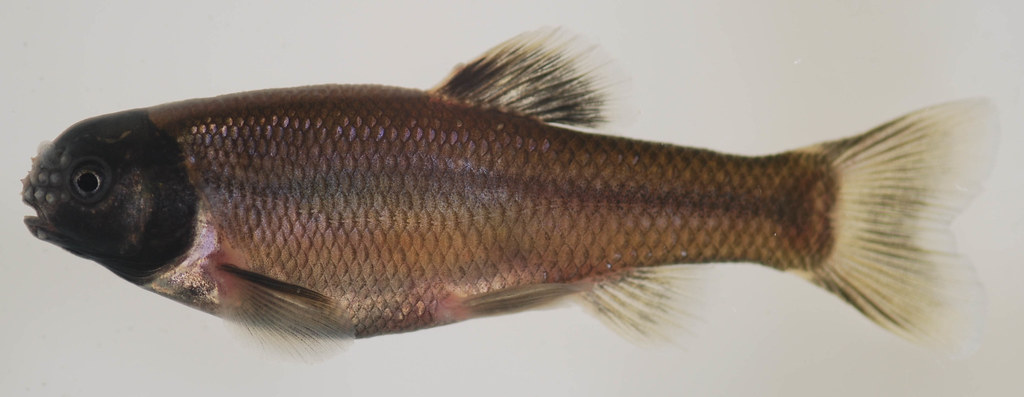
 
Male Fathead Minnow.  Photo by Robert Aguilar, SERC
 
Female Fathead Minnow.  Photo by Robert Aguilar, SERC
So Joey Fishwater, knowing that you are a student of Ichthyology, calls you. “The Fathead Minnows know that “Jaws” is in that tank! And they freak out.”   “How do they do that?”  “But why don’t the males freak out?”  What sensory system do you hypothesize is used by the Fathead Minnows to detect “Jaws?”   How could you test your hypothesis?   And how can you explain the lack of male “fathead freakout?”

The Solution:  Let’s consider the behavior and hypothesize what sensory mechanisms are involved that permit a Fathead Minnow on “death row” to detect danger and “freak out.”  The behavior that Joey observed was a fright response.  Joey ruled out vision by installing the opaque barrier and observing no change.  The next likely sense would be olfaction.  Fish have a very keen sense of smell. It appeared that they were not immediately responding to the presence of the Northern Pike.  The sentence “After several days he noticed behavior of the Fathead Minnows changed in the “death row” section of the tank.” provides an important clue.    The Fathead Minnows were not simply detecting the presence of Northern Pike and showing a fright response.  And later, when Joey fed the “Jaws” only male Fathead Minnows, the fright response stopped.  

The answer to this problem also requires a basic knowledge of sensitive olfaction in fishes in general.  It also requires a specific understanding of the minnow alarm pheromone (aka Schreckstoff) that is produced when the specialized epidermal club cells are injured.  This alarm substance is produced by fishes in the superorder Ostariophysii; this group includes Fathead Minnows.  In Joey’s case, the Northern Pike that had been eating Fathead Minnows became chemically labeled with the alarm pheromone.  The chemical label is the residual alarm substance from the ingested Fathead Minnow that persisted as a byproduct of digestion and is excreted by the Northern Pike. The alarm pheromone chemically labels Northern Pike as dangerous to other Fathead Minnows, even Fathead Minnows that never have witnessed a Northern Pike before. 

Why don’t the males freak out?  The males had secondary sex characteristics (tubercles and enlarged head) that indicated they were preparing to breed.  In the course of courtship behavior or agonistic behavior as they defend a breeding territory, the release of the any alarm pheromone would send a signal to all potential mates to swim away from this location. This is exactly the opposite reaction the breeding male wants.  Consequently, as the breeding season approaches and secondary sex characteristics develop in the male, the epidermal club cells are shed and not replaced. Production of alarm substance cells by fathead minnows is inhibited by androgens.  Therefore, the male Fathead Minnows do not chemically label the Northern Pike because they had no (or fewer) alarm cells.

The experiments to demonstrate this phenomenon were done by Alicia Mathis and Jan Smith (1993). First they confirmed that pike-naive Fathead Minnows exhibited a fright response following exposure to water from a tank containing northern pike that had eaten Fathead Minnows.  Next, they confirmed that the Northern Pike were excreting the minnow alarm substance; they used the chemical stimuli from pike that had eaten breeding male minnows as a control stimulus.   

To the student who claims that “this question is unfair!” I respond that the problems that students of the fishes must solve on a daily basis are at least as complex.  They require one to integrate knowledge from different chapters of the text, different disciplines, and past experiences of many specialists.  The fact that fish as small and plain as a Fathead Minnow are able to survive in a world filled with threats indicates that they are adjusting to changing threats all the time.  

The Fathead Minnow has become an excellent model species for studies of estrogen disruptors because of its adaptability in aquaria, short-life span, and well-understood reproductive requirements.  Recent findings highlight the significance of hormones in our environment. Cattle are fed growth promoters to enhance yields before slaughter.  These are androgens (17-β-trenbolone) that disrupt normal reproductive development in male and female Fathead Minnows (Ankley et al. 2001, 2003).   Males and females exposed to feed lot effluents have altered reproductive development (Orlando et al. 2004).  Endocrine disruption is a pervasive problem in our freshwaters and the Fathead Minnow has become a well-studied model used in many studies of endocrine disruption (Watanabe et al. 2016).  If the Fathead Minnow cannot regulate it's reproductive cycle in our natural waters, perhaps we should be more concerned about the water we drink.
References
Ankley, G.T., K.M. Jensen, M.D. Kahl, J.J. Korte, and E.A. Makynen.  2001.  Description and evaluation of a short-term reproduction test with the fathead minnow (Pimephales promelas).  Environmental Toxicology and Chemistry 20(6):1276-1290.
Ankley, G.T., and twelve coauthors. 2003.  Effects of the androgenic growth promoter 17-β-trenbolone on fecundity and reproductive endocrinology of the fathead minnow. Environmental Toxicology and Chemistry 22(6):1350-1360. 
Mathis, A. and R.J.F. Smith.  1993.  Chemical labeling of Northern Pike (Esox lucius) by the alarm pheromone of the Fathead Minnow (Pimephales promelas).  Journal of Chemical Ecology 19(9):1967-1979.
Orlando, E.F., and eight coauthors. 2004. Endocrine-disrupting effects of cattle feedlot effluent on an aquatic sentinel species, the fathead minnow.  Environmental Health Perspectives 112(3):353-358.  
Watanabe, K.H., M. Mayo, K.M. Jensen, D.L. Villeneuve, G.T. Ankley, and E.J. Perkins. 2016.  Predicting fecundity of fathead minnows (Pimephales promelas) exposed to endocrine-disrupting chemicals using a MATLAB®-based model of oocyte growth dynamics.  PLoS ONE 1(1): e0146594. doi:10.1371/journal.pone.0146594


Thursday, February 11, 2016

What’s a pughead? A rare skeletal anomaly in fishes by Don Orth


We spend over 99% of our time teaching and learning about what is normal when it comes to the fishes.  However, there are also anomalous fishes; these are abnormal, or unusual, and deviate from what is normal. Because the occurrence of anomalies is a rare event, we don’t set out to study anomalous fish.   In normal situations, the occurrence of anomalies in freshwater fish samples is only ¼ of 1 percent or less in undisturbed communities (Berra and Au 1981).  One of these deformities is the pughead, or bulldog, a deformity that is encountered rarely in the fish world.  Warlen (1969) reported only two pugheaded specimens of Atlantic Menhaden, Brevoortia tyrannus in 1.2 million examined!  It's as rare as a four-leaf clover.   However, when we encounter these anomalies, they are mysteries to solve.  In biology the study of the abnormalities in physiological development is called teratology (from Greek, teras, meaning "monster").    
   
One approach to assessing the quality of our freshwaters involves sampling fishes and enumerating anomalies.  The index of biological integrity (IBI) has one component that is based on quantifying the extent of deformities, erosions, lesions, and tumors observed on a sample of fish.   As contamination by physical and chemical pollutants increases, the occurrence of deformities, erosions, lesions, and tumors typically increases.   These and other measures contribute to the nationwide assessment of stream impairment

The pughead deformity was first recorded in 1553 by French Naturalist, Pierre Belon, for Atlantic Salmon.  In 1554, Guillaume Rondelet, also described the deformity from a malformed specimen of the common carp (Gudger 1928).  Rondelet’s malformed carp head (below) very much resembles the bulldog’s  head.
Rondelet’s carp described in 1554 (Gudger 1928)
“Valenciennes (in Cuvier and Valenciennes, 1848, in the Histoire Naturelle des Poissons XXI, p. 335) found two adult pug-headed trouts in the collections of the great Paris museum…Valenciennes expresses wonder how this fish managed to obtain food since the intermaxillaries were bent backward and underneath so that they touched the tissues of the roof of the mouth. The lower jaw extended beyond the upper by its whole length; i.e., the front part of the head was abruptly rounded downward.”   Today, the pughead deformity has been documented in well over 100 fish species.
 
Pugheaded specimens of Brown trout (top left), Blue Catfish (top right)  Cobia (bottom left) and Striped Bass (bottom right)

Although the pugheaded specimen may appear to be damaged by some physical trauma, the deformity starts in early development.  See drawing (below) of a pughead trout hatchling by Girdwoyn (1877, cited in Gudger 1929).    An early hint that it was not an entirely genetic defect comes from observations by Quatrefages in 1888 (Gudger 1929) who described a pughead trout twin embryo, one pugheaded and one not. 

 Illustrations of pughead trout embryo (left), twenty-day-old trout embryo (middle), and twenty-two-month-old rainbow trout (right) from Girdwoyn (1877, cited by Gudger 1929)
The etiology of this deformity is seldom studied, so we don’t fully understand the degree to which it is an environmental or genetic anomaly.  Most abnormal individuals probably do not survive embryonic, larval, or juvenile stages.  In one experiment with Rainbow Trout (Oncorhynchus mykiss), Mostafa and Rezvani (2007) found the “abnormality was not significantly higher in matings with close family than normal mating, therefore it may be due to environmental factors of management problems.”

The deformed head means that brain ”deformation is practically confined to the preorbital part of the skull, about all that will be affected are the olfactory nerves and the nasal organs.”  Yung (1901) examined a brain in a 36mm trout and found the “forebrain seems to be reduced in size, the entire right side of this part from the cerebellum forward is, in keeping with the external conditions of the right side of the head, very much reduced and defective, and finally the right olfactory nerve is lacking.”  The neurological effect of the pugheaded condition has not been investigated.

During recent sampling of the Blue Catfish, Ictalurus furcatus, we encountered a pugheaded specimen (Schmitt and Orth 2015).  It was our first encounter with this malformation but we quickly learned that this rare deformity has been described in many other fishes. Most of the descriptions of the deformity are based on a single specimen (e.g., pugheaded cobia by Franks 1995).  However, we encountered 18 pugheaded Blue Catfish in the tidal Rappahannock River in eastern Virginia, a tributary of the Chesapeake Bay.   The finding was even more surprising because, despite extensive sampling in four tidal rivers, pugheaded specimens were encountered at only six sampling sites within the upper tidal zone of the Rappahannock River.   We are not able to document a specific cause for this deformity.  Rather, we hypothesized that severe and prolonged hypoxic events throughout the river when Blue Catfish eggs are developing may be responsible for the pughead condition.      

X-ray images of a normal (top) and pugheaded (bottom) Blue Catfish. Note the anomalous bone structure, characterized by a steep, bulging forehead and incomplete closure of the mouth.
The pugheaded fish looks like it swam hard into a wall; however, the condition begins in the embryo stage.   The condition may be mild or severe and likely interferes with feeding success, depending on the severity.    It should be a rare occurrence in natural populations and has been more frequently observed in aquaculture.   Chemical contaminants, hypoxia, dietary limitations or excesses, and temperature variations during larval development are reasonable postulates, as well as epigenetic control of mutations.   If you ever collect a pugheaded fish, it’s a rare occurrence.  Consider yourself lucky!

References
Berra, T.M., and R.-J. Au. 1981. Incidence of teratological fishes from Cedar Fork Creek, Ohio. The Ohio Journal of Science 81:225-229.
Franks, J.S. 1995.  A pugheaded Cobia (Rachycentron canadum) from the northcentral Gulf of Mexico.  Gulf Research Reports 9(2):143-145. 
Gudger, E.W. 1928. Guillaume Rondelet’s pugheaded carp. Bulletin American Museum of Natural History 28(1):102-104.
Gudger, E.W. 1929.  An adult pug-headed brown trout, Salmo fario, with notes on other pug-headed salmonids.  Bulletin American Museum of Natural History 58:531-559.
Mostafa, Y. and S. Rezvani.  2007.  Effect ff genetic and environmental factors on malformation in Rainbow Trout (Oncorhynchus mykiss). Animal and Fisheries Science 19:78-85.  
Schmitt, J.D., and D.J. Orth. 2015.  First record of pughead deformity in Blue Catfish.  Transactions of the American Fisheries Society 144:1111-1116.  
Warlen, S.M. 1969.  Additional records of pugheaded Atlantic Menhaden, Additional Records of Pugheaded Atlantic Menhaden, Brevoortia tyrannus. Chesapeake Science 10:67-68.

Friday, February 5, 2016

Wow! Did You See That Yellow Stingray? by Don Orth

This post is not about the Corvette Stingray; rather it’s the Yellow Stingray Urobatis jamaicensis  (Cuvier, 1816), a ray in the order of stingrays (Myliobatiformes) and the family of American round stingrays (Urotrygonidae).  But they both tell stories of contraints in morphological design over  time.  The stingrays (the fish) are all extremely depressiform with pectoral fins that surround much of the body and are fused to the head making the Myliobatiform pectoral fin one of the most unique appendages of all vertebrates. These genetic and developmental constraints place limits on the design of the new phenotypes, just as market expectations place limits on the design of new models of the Corvette Stingray.   Advertisements for the Corvette boast that the "Stingray is a perfect driving machine, born from brilliant engineering and precision performance. Its aggressively sculpted exterior is a statement of intent; its driver-oriented cockpit is a creation of purpose."    "Stingray lives at the intersection of race-proven technology and provocative, purposeful design. Every element serves a purpose, from functional exterior vents to intelligent driver controls." It's a low-built car designed for performance at high speeds (sports car) and we are unlikely to see a new hybrid or SUV model Corvette Stingray produced by Chevrolet anytime soon.   
Chevrolet Corvette Stingray Targa C3 by stkone on Flickr
Phylogenetic constraint means "that certain evolutionary pathways are not likely to be followed by a species or group of related species, as a result of prior evolutionary history. In short, yesterday's adaptation may be today's constraint." (J.D. Ligon in McKitrick 1993).  The round stingrays are intermediate group located between the basal flatsharks, Sawfish (Pristidae) and guitarfish (Rhinobatidae), and the more derived Eagle rays (Myliobatidae).  All are derived from a common ancestor with the extremely dorsoventrally depressed body form and expanded pectoral fins.   The body form constraint is evident in all these flatsharks.  Let’s explore the constraint with the Yellow Stingray (the fish) as an example. 

The Yellow Stingray is a benthic dweller found on tropical shallow marine reefs of western Atlantic from Florida south through the Caribbean and to northern South America.   Coloration is variable.  The oval-shaped, flattened disk is yellowish – hence the name -- with dark vermiculations and spots that form a variety of patterns on the upper surface.   The complex and changeable coloration patterns are likely associated with camouflage. The relatively small Yellow Stingray is often seen buried in sand or resting on rocky substrates.  Their movements increase during nocturnal and crepuscular periods.  
Yellow Stingray left photo by DJ Orth,  and cleared and stained Electric ray (Torpedinidae) by Adam Summers
Before mating, the male and larger female swim together for several meters.   Then the male bites at the margin of the female’s pectoral fin until successfully biting and holding the pectoral fin such that he can swing underneath the female.  This abdomen-to-abdomen position allows the male to insert a clasper for copulation.   In fact, the mature males possess upper teeth that are more loosely spaced with high conical cusps to better grasp the female during copulation  (Source: FMNH, Young 1993). Yellow Stingrays are live bearers, and produce 3-4 live young.   Their nursery habitats are more likely to be in shallower water.

Low reproductive output is another phylogenetic constraint; a few females may produce more than 4 offspring, but that still means the many Yellow Stingrays must survive and grow to maturity to maintain populations. Maximum life span is relatively short (7-8 years) when compared with other elasmobranchs.  Females move to nearshore areas for pupping so that the small neonates may avoid predators and maximize individual growth rates..   They possess a venomous spine, which further protects the Yellow Stingray from harassment. Finally, panoramic vision, adjustable coloration pattern, burial in sand, and low movement during daylight further reduces predation.   

The depressiform body swims via undulations of its enlarged pectoral wings.  This permits the Yellow Stingray to gracefully generate forward thrust without disturbing the substrate and attracting attention.   Watch video  video 1   video 2  to observe this swimming motion in their habitat. 

The extreme depressiform body means that the field of vision is different from other fishes.   The Yellow Stingray needs to see and detect motion or predators in a wide field.   The eyes are periscopic, enabling them to protrude above the substrate when the ray is buried.   Each eye has a covering that allows fine control over amount of light entering the pupil to permit the Yellow Stingray to be active during nocturnal and crepuscular periods.  McComb and Kujiura (2008) demonstrated a 360° panoramic visual field in the horizontal plane; binocular vision was possible in 34° anterior view.  This field of vision is larger than the more basal members of the batoid clade.  However, because of the phylogenetic constraint, the vision of Yellow Stingray is limited binocular forward-facing vision and depth perception is inferior to a fish with frontally positioned eyes.  Because the mouth is positioned ventrally, the Yellow Stingray never sees what it eats.  Rather it uses sensitive touch receptors and electroreceptors to locate prey. This fish is very common in public aquariums, as it readily feeds on shrimps, clams, worms, and small fishes.  
Yellow Stingray eye (left, Keri Wilk) and field of vision (right, McComb and Kajiura (2008)
Over 1,000 species of fish are venomous.  The venom of the Yellow Stingray is distributed via a stout spine on its tail.   If you accidently step on this fish it will use its spine in self defense.   The tail spine can inflict a nasty puncture wound that will bleed profusely and cause swelling and pain for several days.  Here is a treatment plan if you are stung (No! do not pee on it!).  Any explorations in shallow coastal waters should be done with protective beach shoes.  In areas where stingrays live, learn to do the stingray shuffle and you will scare them away.   Or better yet, put on a mask and snorkel and observe the Yellow Stingray up close, without disturbing them. Yellow Stingrays are easily observed by divers and snorkelers.  In fact, some evidence suggests that diver surveys, collected for REEF, may contribute to estimating trends in abundance.
 
Tail spine of a Yellow Stingray © Cathleen Bester/FLMNH (left)  and Do the Shuffle Warning sign
The Yellow Stingray, though widely distributed and commonly sighted, is usually seen by divers singly.  It remains one of many unexplored species of Elasmobranchs, and has been the subject of few scientific investigations outside the Florida region (Spieler et al. 2013).   The Yellow Stingray has a brain that is 3-10 times the size of guitarfish, skates, and electric rays, yet the fish has not been investigated by neurophysiologists or behaviorists.   Current issues relate to recent decrease in Yellow Stingray numbers in the Florida Keys, which may be related to increase in Goliath grouper, Epinephelus itajara, habitat destruction, or harvest (Ward-Paige et al. 2010).  More questions than answers when it comes to the Yellow Stingray.  Wow! They are fun to watch.
 
References

McComb, D.M., and S.M. Kajiura. 2008.  Visual fields of four batoid fishes: a comparative study. The Journal of Experimental Biology 211:482-490   
McKitrick, M.C. 1993. Phylogenetic constraint in evolutionary theory: has it any explanatory power? Annual Review of Ecology and Systematics 24:307-330
Spieler, R.E., D.P. Fahy, R.L. Sherman, J. Sulikowski, and T.P. Quinn.  2013. The Yellow Stingray, Urobatis jamaicensis (Chondrichthyes Urotrygonidae): a synoptic review.  Caribbbean Journal of Science 47(1):67-97. 
Ward-Paige, C.A., R.A. Myers, C. Pattengill-Semmens, and H.K. Lotze. 2011.  Spatial and temporal trends in yellow stingray abundance: evidence from diver surveys Environmental Biology of Fishes 90:263-276.

Thursday, January 28, 2016

Goosefish, the Best Animate Fish Trap in the Piscine World, by Don Orth


The Goosefish (Lophius americanus Valenciennes,1837) is a fun and fascinating fish.  It is one of 25 species in the Lophiidae.  The Goosefish occurs in the western Atlantic from Newfoundland south to Florida.  There is a fun assortment of local names, such as the American anglerfish, bellows-fish, devil fish, fishing frog, headfish, molligut, satchel-mouth, wide-game, or monkfish.  Monkfish is the name used in the seafood markets.  There are two closely related species, the European form and the American form. Linnaeus described the European species, Lophius piscatorius in 1758. French zoologist Achille Valenciennes examined North American specimens and found, in 1837, that they differed in teeth, lower lip and spots on its back.  These differences were enough for him to claim that the American form was a distinct species.  It took several decades and additional studies before other Ichthyologists agreed. Today there are seven species of Lophius worldwide and two in North America. The Blackfin Goosefish (Lophius gastrophysus Miranda-Ribeiro, 1915) is distributed in the western Atlantic from Cape Hatteras south to Argentina, including the Gulf of Mexico.

We can speculate about the habits of a fish by carefully examining its body form.   Louis Agassiz, Professor of zoology and geology at Harvard University and founder of the Harvard Museum of Comparative Zoology would often tell the naïve student to “Take this fish and look at it.”     Nathaniel Shaler, in his autobiography, also wrote of Agassiz’s minimalist teaching approach, which my students would find exasperating.  When Shaler asked for explicit instructions, Agassiz replied that he could not be more explicit than saying "find out what you can without damaging the specimen."  Well, the Goosefish is easier to read than most fish. Just look at this fish!
 Left: European Angler Lophius piscatorius illustration by Yarrell (1841)  Right: Photo of Monkfish at Museum of Nature, Ottawa, Canada, by Mike Beauregard
This is one fish that will not be confused with any other fish captured in the same region.  What do we see?   It has a very unique form and a scaleless body.  The head is very depressed and it has large eyes located on top of the flattened head.  Its huge mouth is terminal and the mouth is nearly as wide as the head.   The thick jaws possess long backward pointing teeth. The lower jaw projects well beyond upper.  The skin bears fleshy tendrils or cirri on lateral margins of head, lower jaw, and body.  Its body is flattened dorsoventrally to allow it to hide on the sea floor.  On the midline of the head stand modified anterior dorsal spines that are long and far forward for the normal location of dorsal spines. The first one originates on upper jaw and has a fleshly flattened tip.   The modified spine is called the illicium and the tip is the esca, which serve as fishing rod and lure, respectively.  

Even Aristotle was familiar with this fish and wrote “The accounts commonly given of the so-called  fishing frog are quite true … The fishing frog has a set of filaments that project in front of its eyes; they are long and thin like hairs and are round at the tips; they lie on either side, and are used as baits. Accordingly, when the animal stirs up a place full of sand and mud and conceals itself therein, it raises its filaments and, when the little fish strike against these, it draws them  underneath  into its mouth.... Furthermore, the fishing frog is unusually thin when he is caught after losing the tips of his filaments.”   Eugene Gudger, Ichthyologist with the  American Museum of Natural History described this fish as the “best animate fish trap in the piscine world"  (Gudger 1945).

Ever since the time of Aristotle, we have known (or at least believed) that the lure was used for catching fish prey!  It was not until the Anglerfish was observed carefully in aquaria in the 20th century that its actual “lie-in-wait” and use of lure behaviors were corroborated.   One such observation is based on an astute observer watching a live specimen:
 “An angler when hungry erects the lure immediately any suitable fishes come anywhere near and endeavor to attract one of them close enough to be caught.   The lure is quickly jerked to and fro and, as the rod is almost invisible, the bait  (in my specimens always forked and 'fly-like' not vermiform) simulates some tiny creature darting about.   An attracted fish rushes up in an endeavor to catch it; the bait is skillfully flicked out of its way just in time and, with a final cast, is dashed down in front of the mouth which may open very slightly.  The intended victim, still following the bait, turns slightly head downward; it is now more or less directly head-on to the angler's mouth.  The jaws snap faster than the eye can follow and the tail of the prey is next seen disappearing from sight through the firmly closed mouth.   As far as I have been able to observe, the bait is not actually touched by the victim before it is caught, as has sometimes been supposed.”  Wilson (1937)

Most of the time the Goosefish rests partially buried on soft bottom substrates.  The Goosefish is an opportunistic, non-selective, sit-and-wait predator, luring their prey by raising and moving the illicium.  Watch this video of the European Anglerfish feeding on a goby.  Fishes are the most common diet items.  But one infrequent diet item includes birds, such as the Dovekie (Alle alle), a seabird (see photo).   The Dovekies were preyed on by Goosefish at or near the surface, not the typical habitat or habit (Perry et al. 2013).  Hmm?!  How do you explain this phenomenon?  “Look at the fish” is not sufficient approach to answer the question.   The maximum diving depth of a Dovekie is 20-30 m, not deep enough to ever encounter this benthic predator.   However, those keen observers of the Goosefish know that they are known to rise off the bottom, possibly to ride currents during migration periods in spring and fall or to spawn at the surface (Hislop et al. 2000).  This infrequent behavior leads to infrequent encounters with birds.
Goosefish with Dovekie extracted from stomach.  Photo from Perry et al. (2013)
The whole structural anatomy of the Goosefish is designed to increase efficiency of the habits of the fish.   If you “Take the fish and look at it,” you must say “Wow! Look at those jawbones and pectoral fins and girdle.”   The axial skeleton is very short and the jaws and pectoral skeleton are enlarged. This is not the body of a great swimmer.  The muscles consist of white muscles adapted for non-aerobic swimming.  But the white flesh is moist, firm and very tasty, often marketed as the “poor man’s lobster.”  To prepare a Monkfish before cooking, watch this video.
 
Skeleton of the Goosefish source 
Lophius species are exploited worldwide; they were first taken as bycatch in trawls and later targeted fisheries with gillnets developed. Given the body form, the yield of tail meat to live weight is only 30%. Monkfish livers are also marketed, yielding another high value product.  The predominant fishing grounds in northeastern US are significantly impacted by human activities.  Offshore dumping of municipal, industrial, and explosive wastes were common from New York to Virginia before the passage of the Ocean Dumping Act in 1988. Consequently, high selenium and mercury levels in Monkfish muscle and livers are contemporary human health concerns (Johnson et al. 2011).    

The US commercial fishery for Monkfish increased in the 1980s.  This was soon after passage of the Magnuson Act (1976), which expanded U.S. management jurisdiction in waters out to 200 miles. The Act opened international markets of Europe and Asia and landings peaked by 1998. At this time Atlantic Cod stocks were in decline and harvesters switched to alternative less-valued species, including the Monkfish.    Recruitment of Monkfish has been below average since 2004 The New Englang Fishery Management Council, Mid-Atlantic Management Council along with the National Marine Fisheries Service published a Monkfish Fishery Management Plan in 1999 to rebuild the stocks.  
 
Landings reported for monkfish from 1964 to 2009 (Northeast Fisheries Science Center 2010)
The Goosefish provides students of the fishes a great opportunity to “take this fish and look at it!” and learn about connections between morphological traits and habits.  Recent trends in human uses are also instructive. This fish went from a trash fish to targeted high-value product in a decade.   Monkfish are considered a good seafood alternative by the Seafood Watch; however, there are concerns about bycatch associated with Monkfish harvest.  Most are harvested in multi-species trawling or gillnets or scallop dredges, which catch many undersized fish that must be discarded. Further, contaminant levels from legacy contaminants on many US fishing grounds should be further evaluated before you permanently switch from lobster to Monkfish.  The Fresh Lobster Company will ship fresh Monkfish fillets at $18.50/pound or one 3 pound lobster for $38.75 – your choice.  Neither one is a "poor man's" food.

References
Aristotle 1910. Historia  Animalium, D'Arcy W.  Thompson, trans., Oxford, 620
Fariña, A.C., and seven coauthors.  2008. Lophius in the world: a synthesis on the common features and life strategies.  ICES Journal of Marine Science 65:1272-1280.
Gudger, E.W. 1945.  The Angler-Fish, Lophius piscatorius et americanus, use the lure in fishing.  American Naturalist 79:542-548.
Hislop, J.R.G., J.C. Holst, and D. Skagen. 2000. Near-surface captures of post-juvenile anglerfish in the northeast Atlantic: An unsolved mystery. Journal of Fish Biology 57:1083–1087.
Johnson, A.K., B. Bediako, and E. Wirth. 2011. Metal concentrations in monkfish, Lophius americanus, from the northeastern USA. Environmental Monitoring and Assessment 177:385-397.
Perry, M.C., G.H. Olsen, R.A. Richards, and P.C. Osenton.  2013.   Predation on dovekies by Goosefish over deep water in the Northwest Atlantic Ocean.  Northeastern Naturalist 20(1):148-154.
Wilson, D. P. 1937. Journal of the Marine Biological Association U. K., Vol. 21 (in.s.) 477-496,
Yarrell, W.  1841. "History of British Fishes,' London, 2nd ed., Vol. 1, p. 310.